Israel Admits Over 1,200 Foreign Aircrew Entered Despite No Diplomatic Ties
Translated & summarized from Mako by baba
Over 1,200 foreign aircrew members from countries without diplomatic ties to Israel, including Lebanon, Syria, and Oman, have entered the country this year, officials confirmed. The Ministry of Transportation is legally responsible for screening foreign flight crews, a duty it has allegedly neglected for years. This oversight was highlighted after an Omani citizen allegedly attempted an attack on a flight to Tel Aviv, raising concerns about national security and the enforcement of existing regulations.
The story in 6 lines · by baba
- Over 1,200 foreign aircrew from countries without diplomatic ties entered Israel this year.
- Pilots from Lebanon, Syria, Oman, and potentially Iran were among those entering Israel.
- The Ministry of Transportation is legally responsible for screening foreign flight crews.
- A security directive requires airlines to prevent crew members from countries without diplomatic ties from entering Israel.
- Enforcement of these security checks has reportedly been lax for years.
- An Omani citizen allegedly attempted an attack on a flight to Tel Aviv.
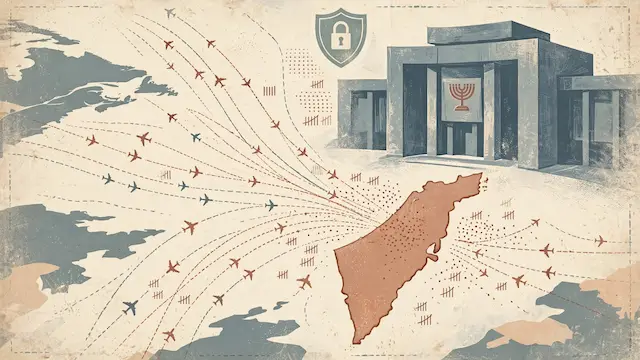
Israeli security officials acknowledged in a closed Knesset Foreign Affairs and Defense Committee meeting that over 1,200 foreign aircrew members, including pilots from countries with which Israel has no diplomatic relations, have entered Israel since the beginning of the year. Representatives from the Ministry of Transportation were reportedly surprised by the figures. Attendees at the meeting were also unsure whether these aircrew members underwent border control or simply landed in Israel before continuing to their next destination.
A security document revealed that the Ministry of Transportation, headed by Minister Miri Regev, is legally responsible for setting security procedures for foreign flights entering Israel, including screening and verifying the identities of pilots and aircrew. This responsibility was highlighted following an attempted attack on a Flydubai flight, where an Omani citizen, Hammam Al-Mammi, managed to sit in the co-pilot's seat of a commercial flight bound for Tel Aviv. The document, dated October 1, 2026, a day after the incident, was sent to security managers of foreign airlines.
The directive, signed by Avri Cohen, Senior Director of Emergency, Security, Information and Cyber Affairs at the Ministry of Transportation, explicitly states that the ministry's security department is responsible for the security of flights entering Israel under the Civil Aviation Security Law. It mandates that airlines must ensure no flight crew member is a citizen or dual citizen of a country that does not have diplomatic relations with Israel. Airlines are required to cross-reference their crew lists with restricted nationalities to prevent entry.
However, the report indicates that these checks have not been consistently enforced for years. The Ministry of Transportation allegedly failed to conduct necessary inspections at destination airports and did not demand cross-referencing of crew lists with restricted nationalities, leaving the screening of pilots to foreign airlines. This lapse reportedly allowed pilots from enemy states and countries without diplomatic ties to routinely enter Israel and control aircraft, nearly resulting in a crash due to the alleged actions of the Omani attacker.
Mentioned
The same event, reported separately by each outlet. Open a few to compare what different newsrooms emphasize — and what they leave out.
Centre 5Right 2Haredi 2Arab 1Other 4















Not the same event — other stories that share this one’s people, places, or theme: background, reactions, and follow-ups.