
US Greenlights Israeli Operations Near Iraq Amid Iran Tensions
Translated & summarized from i24NEWS Arabic by baba
The story in 5 lines · by baba
- US reportedly allows Israel expanded operational freedom near Iraq.
- Israel fears US withdrawal will enable Iranian land corridor to Lebanon.
- Israel plans to target Iranian arms supply routes via Iraq.
- Iranian-linked militias in Iraq refuse to surrender strategic weapons.
- US is bolstering defenses amid potential regional escalation.
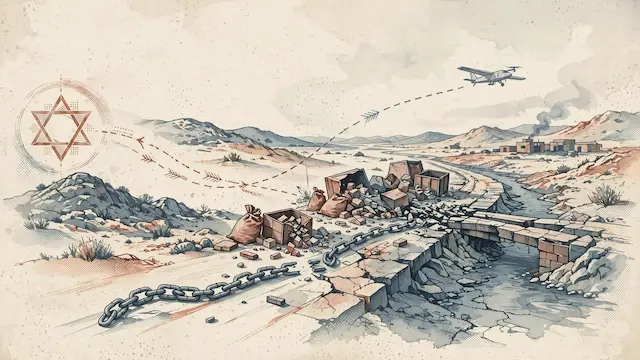
Western sources, cited in a report by "Eram News," indicate that the United States has granted Israel "green light" to expand its operational freedom in airspace near Iraq. This could potentially allow Israel to conduct strikes against Iranian-linked militias and armed factions operating in the region. The U.S. administration is reportedly aware of Israeli plans aimed at thwarting the entrenchment of Tehran-backed militias. Concurrently, Washington is preparing to bolster its defensive systems to protect its remaining forces and interests in the Middle East, alongside building a regional defense network in anticipation of potential retaliation and escalation following any Israeli action.
Western intelligence assessments, according to the report, suggest that the Israeli military and Mossad have completed operational preparations for potential airstrikes and operations targeting bases and weapons depots of Tehran-aligned factions in Iraq. A primary Israeli concern, stemming from the perceived reduction of U.S. military presence, is that a U.S. withdrawal could empower Iran to establish a contiguous land corridor to Lebanon via Iraq, a route sometimes referred to as the "Shia Crescent."
Both the U.S. and Israel estimate that Iran's Revolutionary Guard Corps is increasingly utilizing this corridor to transfer advanced military equipment, precision ballistic missiles, long-range drones, and financial and logistical aid to rebuild the capabilities of Iranian-linked militias and allies in the region. Israeli plans are reportedly focused on targeting supply routes through Iraq to prevent it from becoming a key rear base for Iranian arms transfers.
Meanwhile, Iraqi media reports highlight difficulties faced by the Baghdad government in its efforts to monopolize arms. Despite an extension until mid-2027 for armed factions to surrender weapons and integrate members into official security institutions, key groups, including Kata'ib Hezbollah and Harakat al-Nujaba, are refusing to relinquish their arsenals. These factions reportedly distinguish between light and medium weapons, showing some flexibility, and "strategic weapons" such as long-range drones, cruise missiles, and ballistic missiles, which they intend to retain as an independent military force directly linked to Iran's Quds Force.
These developments suggest an increasing overlap between Baghdad's efforts to assert state control over weaponry and Israel's concerns about the growing military capabilities of Iran-aligned factions in Iraq, as the U.S. prepares for potential new regional escalation.
Mentioned
The same event, reported separately by each outlet. Open a few to compare what different newsrooms emphasize — and what they leave out.
Centre 3Right 5Haredi 2Other 2











Not the same event — other stories that share this one’s people, places, or theme: background, reactions, and follow-ups.
