
Israel Prepares for Daylight Saving Time Change, Experts Advise on Adjustment
Translated & summarized from Maariv by baba
The story in 5 lines · by baba
- Israel will switch to winter time by moving clocks back one hour.
- The body's biological clock may take time to adjust to the change.
- Sleep, alertness, and sleepiness can be temporarily affected.
- Individuals, especially 'night owls' and children, may experience effects differently.
- Maintaining routines and light exposure can aid adaptation.
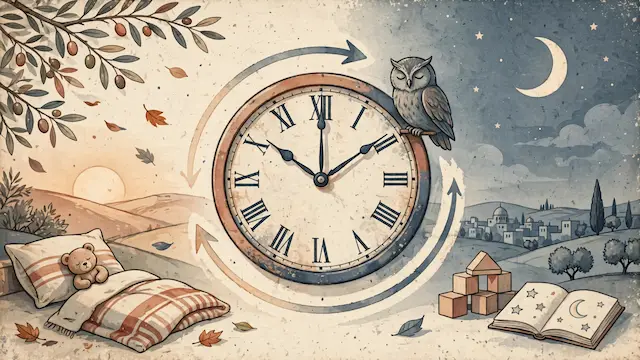
Israel is set to adjust its clocks backward by one hour at the end of the month, marking the transition to winter time. While the physical change is instantaneous, the body's biological clock may take longer to synchronize, according to a family doctor from Maccabi.
Recent research, including a review study from 2025, indicates that the shift can temporarily affect sleep patterns, alertness, and daytime sleepiness. These effects are not uniform, with some individuals, particularly those who are naturally "night owls" or "evening types," experiencing more pronounced impacts. For many, the transition may go largely unnoticed, while others might feel increased fatigue, wake up earlier than usual, or struggle to fall asleep at their regular times.
Children, especially younger ones accustomed to strict routines, may also be more sensitive to the one-hour change in their wake-up, meal, or sleep times. Experts suggest maintaining a consistent daily schedule for children during the initial days following the clock change to minimize disruption.
To ease the adjustment, maintaining regular sleep and wake times is recommended. Exposure to natural light during the day, avoiding caffeine in the late afternoon and evening, and allowing the body time to adapt are also advised. Mild fatigue or temporary changes in alertness are considered normal parts of the adaptation period. The general consensus is that while the clock change is swift, the body's adjustment process is more complex, and providing optimal conditions for synchronization is key.
The same event, reported separately by each outlet. Open a few to compare what different newsrooms emphasize — and what they leave out.
Centre 1Right 1Other 1


Not the same event — other stories that share this one’s people, places, or theme: background, reactions, and follow-ups.
