
Ex-IDF Official Cites Aviation Security Flaw After Dubai Flight Incident
Translated & summarized from Now 14 by baba
The story in 5 lines · by baba
- Former IDF intelligence chief cites aviation security's focus on passengers.
- He warns of the threat of radicalized pilots, hard to detect.
- Kuperwasser compares the lapse to pre-October 7th intelligence failures.
- He calls for preparing for worst-case scenarios in security.
- The official also cited systemic failures regarding October 7th.
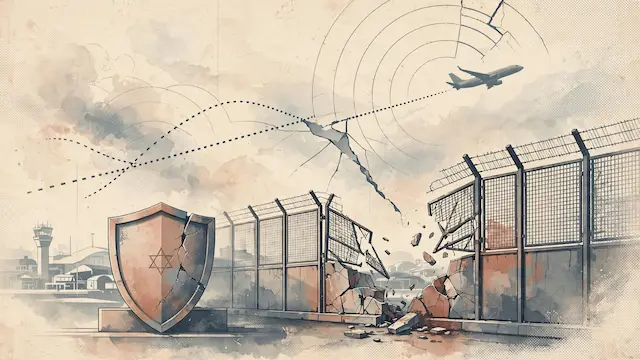
A former senior Israeli military intelligence official has identified a significant conceptual failure in aviation security following a recent incident involving a Flydubai flight. Yossi Kuperwasser, who previously headed the Research Division of Military Intelligence (Aman), stated that the prevailing assumption in aviation security is that threats primarily originate from passengers, overlooking the possibility of internal threats from within the cockpit.
Kuperwasser explained that a pilot becoming radicalized poses a particularly difficult threat to detect, unlike organized terrorist activity which might be flagged by intelligence. He drew a parallel between this perceived security lapse and the intelligence failures that preceded the October 7th attacks, suggesting a tendency to assume the worst-case scenario would not materialize.
He elaborated that such a private radicalization of an individual, like a relatively new pilot at Flydubai, might not be detected by security agencies. Kuperwasser emphasized the need to always prepare for the worst possible outcome rather than the most convenient one, a principle he believes was neglected prior to October 7th.
In a related discussion about the October 7th massacre, Kuperwasser asserted that it represented a broad systemic failure involving multiple branches of the security apparatus, including the IDF Chief of Staff, head of Aman, the Research Division, Southern Command intelligence, and the Shin Bet.
The same event, reported separately by each outlet. Open a few to compare what different newsrooms emphasize — and what they leave out.




Not the same event — other stories that share this one’s people, places, or theme: background, reactions, and follow-ups.

