
Israeli Aviation Security Flaws Exposed by Flydubai Incident
Translated & summarized from Hamal by baba
The story in 5 lines · by baba
- Former official warns of systemic aviation security flaws in Israel.
- A Flydubai flight incident highlighted internal security threats.
- Israel lacks a centralized state authority for aviation security.
- Past proposals for structural reforms were rejected.
- Concerns exist about fragmented responsibilities and regulatory failures.
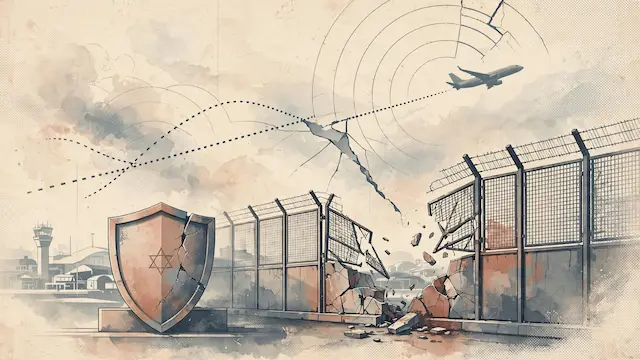
A recent incident involving a Flydubai flight en route to Israel has reignited concerns about civil aviation security. Dani Shenhar, former director of the Security, Emergency, and Cyber Division at the Ministry of Transport, had previously warned about the potential for individuals within the aviation system to exploit their access to bypass security measures. Shenhar noted that a 2011 proposal by the Ministry of Transport to establish a state authority for aviation security as a subordinate unit within the ministry, responsible for all aviation security matters domestically and abroad, was rejected.
Shenhar's writings suggest that Israel relies on luck and short-sighted "firefighting" responses rather than implementing comprehensive structural reforms to prevent future disasters. He highlighted the internal threat as a significant vulnerability in aviation security, drawing parallels between the recent Flydubai incident and his previously identified scenarios. The incident, though not definitively proven to be a terrorist act, raised concerns because the threat allegedly originated from within the system, specifically from a crew member with direct access to the cockpit and aircraft systems.
The issue of fragmented authority in civil aviation security is also a major concern. Shenhar pointed out that despite the critical nature of aviation security, multiple bodies in Israel handle this sensitive area, leading to a diffusion of responsibility. A proposal from 15 years ago to create a single state body to centralize this oversight was also rejected.
In his book, Shenhar criticizes the division of powers and the lack of a "professional guide." He identified a structural flaw where the Civil Security Division of the Ministry of Transport bears significant responsibility for preventing aviation terror threats, particularly against foreign airlines, without a designated guiding state body like the Shin Bet and without the necessary operational powers and structure. He warned that relying on civilian bodies or commercial companies, such as El Al's security division, creates regulatory failures and structural conflicts of interest.
Shenhar also criticized the cancellation of the "Positive Code" project in May 2010, a technological initiative involving a smart card and a one-time code to verify pilots and aircraft identities, aimed at preventing hijackings. He claims this project was torpedoed due to commercial pressures, concerns from international pilot unions, and a desire to advance the "Open Skies" agreement, which he described as a capitulation.
Shenhar concludes that the Flydubai incident serves as a red warning light, necessitating a review of lessons learned to prevent recurrence. He stresses that deep structural problems, which can no longer be ignored, lie behind the aerial drama. He expressed hope that positive outcomes will emerge from this event, but cautioned against relying on luck in the future.
The same event, reported separately by each outlet. Open a few to compare what different newsrooms emphasize — and what they leave out.


Not the same event — other stories that share this one’s people, places, or theme: background, reactions, and follow-ups.