
Gaza Displaced Appeal for Winter Aid Amidst Dire Conditions
Translated & summarized from Arab48 by baba
Displaced Palestinians in Gaza are appealing for urgent humanitarian aid, including tents and food, as winter approaches. They highlight dire living conditions, inadequate shelter, and the ongoing Israeli blockade, fearing a repeat of past tragedies during harsh weather.
The story in 5 lines · by baba
- Gaza's displaced appeal for tents and winter aid due to dire conditions.
- Israeli blockade exacerbates humanitarian crisis for families in makeshift shelters.
- Thousands of families face severe shortages of essential supplies.
- Past winters saw tent collapses and deaths due to cold and poor shelter.
- Displaced fear a repeat of tragic conditions without immediate assistance.
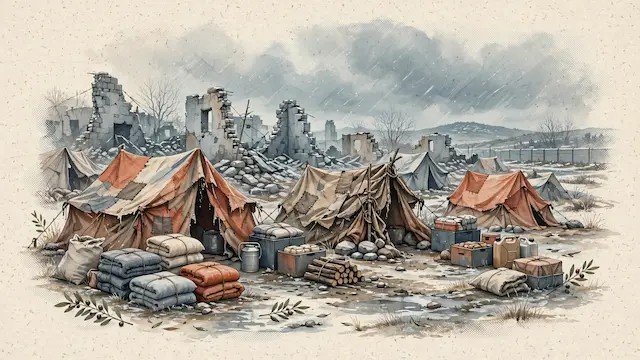
Palestinian families displaced by the Israeli military in southern Gaza have issued urgent appeals for tents, food, and medical supplies ahead of the approaching winter season. Dozens of displaced individuals gathered in the "Fash Fash" area north of Khan Younis, southern Gaza, to highlight their deteriorating humanitarian situation, warning that the ongoing Israeli blockade exacerbates their plight.
Participants in the protest called on international institutions, donors, and local organizations to provide essential shelter, aid, and solutions for water and lighting shortages. Protestors carried signs reading, "Our tents are torn and our bellies are empty.. do not leave us to the unknown," and "We are not numbers on your lists.. we are rightful owners."
They specifically requested tents, tarpaulins, heating supplies, bedding, blankets, food parcels, and health supplies, as well as addressing deficiencies in drinking water and lighting. Concerns were raised that winter rains and winds would worsen the suffering of families living in inadequate shelters. The Palestinian Ministry of Social Development previously stated in mid-August that over 90% of Palestinians in Gaza were living in dilapidated tents, shelters, or the ruins of destroyed homes.
Displaced individuals expressed fears of a repeat of past winter tragedies, where tents were flooded or blown away, leaving people exposed to the elements, and resulting in deaths from extreme cold and collapsing structures. "The displaced families have run out of patience due to the scarcity of aid and basic necessities," said displaced person Iyad Zomer, emphasizing the need for immediate assistance to face the harsh weather.
Another displaced person, Iyad Al-Sha'er, described the difficult living conditions and the lack of adequate protection from the cold and rain offered by existing tents. Ahmed Hassan Al-Najjar, who is in charge of the "Fash Fash" area, reported that approximately 6,000 families, or about 40,000 people, are housed in around 35 camps in the area, all suffering from a shortage of tents, tarpaulins, and food and health parcels.
The appeals come as thousands of families prepare for winter in dire humanitarian conditions, with a growing need for tents, insulation materials, tarpaulins, and heating. Displaced people fear that a lack of shelter will lead to their tents being flooded or damaged by rain and wind, compounding existing shortages of food, water, and basic services. This situation is attributed to Israel's alleged violation of the humanitarian protocol of the ceasefire agreement, which began on October 10, 2025, concerning the entry of aid and shelter materials, alongside continued Israeli shelling of Gaza.