
Flydubai Co-Pilot's Radicalization Led to Hijacking Attempt
Translated & summarized from Mako by baba
The story in 5 lines · by baba
- Flydubai co-pilot attempted mass suicide attack on flight with 174 people.
- Co-pilot underwent a year of covert Islamist radicalization.
- Passengers and captain subdued the attacker, preventing crash.
- Israel investigating security lapse allowing Omani pilot on flight.
- Conflicting views on potential Iranian involvement in the attack.
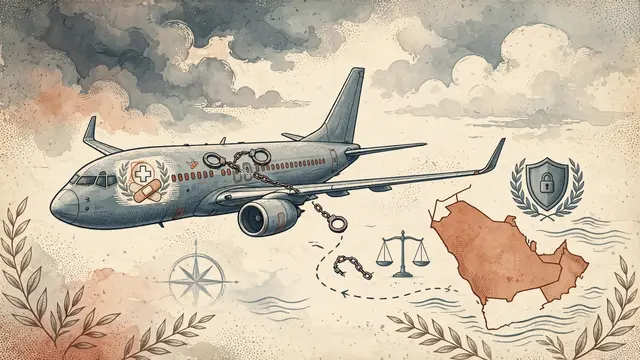
An investigation into the attempted hijacking of a Flydubai flight by its co-pilot reveals a rapid and covert process of Islamist radicalization. The co-pilot, an Omani citizen whose name has not been officially released, was employed by the airline for less than a year. Intelligence gathered in Saudi Arabia and Israel suggests he intended to carry out a mass suicide attack targeting Israeli passengers and destabilizing regional relations established by the Abraham Accords. His personal and professional record at Flydubai was clean, and he passed all required aviation and security checks in the UAE, with no one in his professional circle noticing any behavioral changes. However, over the past year, he underwent a deep and hidden process of Islamist indoctrination. Prime Minister Benjamin Netanyahu stated that Israel had gathered significant personal data indicating the co-pilot's Islamist leanings, and Defense Minister Israel Katz labeled him a "jihadist terrorist." Israeli security officials believe he acted as a lone attacker, deciding independently to carry out the attack without direct orders from a terrorist organization. The choice to target a flight with dozens of Israelis was reportedly motivated by a desire to harm people and symbolically disrupt the Abraham Accords.
During the flight over Jordan and northern Saudi Arabia, the co-pilot produced a knife, allegedly smuggled beforehand, and attacked the Indian captain, Sumit Machhar, stabbing him multiple times. Simultaneously, he pushed the control column forward, disabling critical systems and initiating a rapid descent of over 14,000 feet to crash the aircraft with its 174 occupants. Captain Machhar recounted the terrifying moments to the Prime Minister, describing his struggle for survival and his decision to fight back despite his injuries. Passengers Yeniv Hayon, Zvika Mans, and Assaf Radwan reportedly subdued the attacker, using a headphone cable to restrain him. The co-pilot made no demands and did not attempt to divert the plane, with all his actions focused on ensuring the loss of control of the aircraft. Netanyahu likened the incident to the 9/11 attacks, citing the co-pilot's calls to kill and his recent radicalization.
Conflicting views emerged regarding potential Iranian involvement. U.S. President Donald Trump suggested a link to Iran was being investigated, while Israeli intelligence sources stated they had not yet found evidence of direct involvement by Tehran or its proxies. Netanyahu himself expressed caution, noting that while there was intelligence about Hezbollah and Hamas planning attacks against Israelis abroad ahead of Israeli elections, there was no specific warning about this flight. Despite the lack of direct evidence, Israeli security agencies are concerned about copycat attacks.
The UAE's Attorney General ordered a special investigation team to examine the incident for premeditation and terrorist motives. In Israel, the event triggered internal reviews into the security lapse that allowed the co-pilot, an Omani citizen, to be assigned to a flight landing in Israel, which violates security agreements prohibiting crew members from countries without diplomatic ties with Israel from serving on such flights. Netanyahu acknowledged this as a systemic failure, stating that an Omani pilot being assigned to the flight was improper and required immediate attention. The Shin Bet and Ministry of Transportation are investigating how the co-pilot's name bypassed initial screening mechanisms and allowed him access to the cockpit.
Read the original at MakoMentioned
The same event, reported separately by each outlet. Open a few to compare what different newsrooms emphasize — and what they leave out.

























Not the same event — other stories that share this one’s people, places, or theme: background, reactions, and follow-ups.


