
Temperatures to Plummet Mid-Week as Sukkot Holiday Nears End
Translated & summarized from Ice by baba
Israel is bracing for a significant temperature drop mid-week as the Sukkot holiday concludes, with forecasts indicating below-average temperatures and possible light rain. Longer-term predictions suggest a stormy and wet winter in 2026-2027, with the Israeli Meteorological Service preparing storm names.
The story in 5 lines · by baba
- Temperatures to drop significantly on Tuesday.
- Light rain possible in northern Israel and coastal plain.
- Below-average temperatures expected mid-week.
- Winter 2026-2027 predicted to be very wet.
- Israeli storm names released by meteorological service.
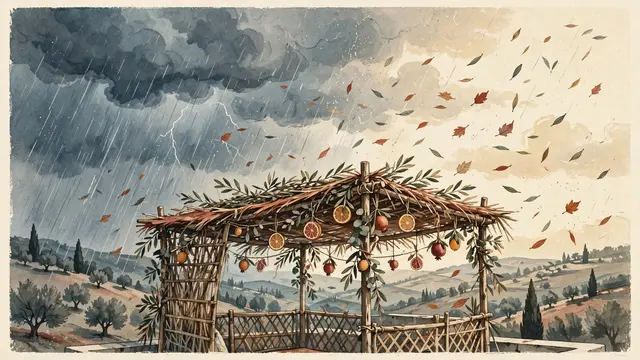
As the summer heat continues to linger, signs of its end are emerging, with the Sukkot holiday bringing a notable shift in weather patterns. Sunday is expected to be clear to partly cloudy with temperatures remaining stable and seasonable. Monday will see similar conditions, partly cloudy to clear, with a slight temperature increase, particularly in the center and south, though still within seasonal norms. Light, scattered local rain is possible in northern Israel.
The significant change arrives Tuesday, with a substantial drop in temperatures and heat levels. The weather will be partly to fully cloudy, and temperatures will fall below seasonal averages, especially in the center and south. Light drizzle or local rain may occur in northern Israel and the coastal plain. This cooling trend is forecast to continue into Wednesday, with further temperature decreases and potential for light, local rain, primarily in the north.
Forecasted temperatures for Sunday include: Jerusalem 18-26°C (64-79°F), Tel Aviv 23-28°C (73-82°F), Qatzrin 18-31°C (64-88°F), Beit She'an 22-34°C (72-93°F), Haifa 21-28°C (70-82°F), Beersheba 19-30°C (66-86°F), Mitzpe Ramon 17-29°C (63-84°F), and Eilat 24-36°C (75-97°F).
Looking further ahead, global weather models predict a stormy and unusually wet winter for 2026-2027. The "El Niño" phenomenon is expected to alter major air currents, intensifying storms in the Middle East and leading to above-average rainfall in October, November, and December. In preparation, the Israeli Meteorological Service has released a list of 25 official names for extreme weather systems, including eight Israeli names. The first Israeli name, "Bar," is designated for the second storm system of the season, expected before the end of 2026, followed by "Eitan" and "Hadar."
Mentioned





