
Israeli Banks Face Potential Harm From European Sanctions
Translated & summarized from Maariv by baba
Israeli industrial groups are worried about new European sanctions targeting companies operating beyond the Green Line, potentially impacting Israeli banks and 18,000 Palestinian workers. The Manufacturers Association is seeking government assistance to mitigate the economic fallout.
The story in 5 lines · by baba
- European sanctions may harm Israeli banks and industries beyond the Green Line.
- Approximately 18,000 Palestinian workers could be indirectly affected.
- The Manufacturers Association is seeking government aid and policy changes.
- Financial institutions with business ties to targeted companies are also at risk.
- The Bank of Israel has not yet addressed the potential financial impact.
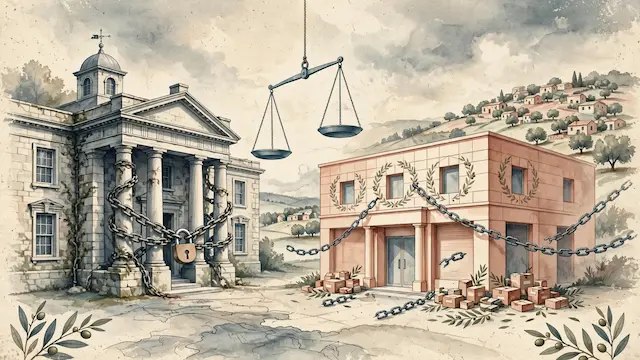
Israeli industrial bodies are expressing significant concern over impending European sanctions, particularly from the UK, targeting Israeli industries operating beyond the "Green Line" (the 1967 borders) and companies with business ties to them. Avraham Novogrotsky, president of the Manufacturers Association of Israel, has contacted relevant government ministries, including Foreign Affairs, Economy, and Finance, to explore aid options for affected businesses.
Industrial exports from Israel are valued at approximately 175 billion shekels, with a substantial portion in high-tech. Exports from companies operating beyond the Green Line account for about 5% of the total, amounting to roughly 9 billion shekels. These include factories in plastics, machining, and food processing, which employ around 18,000 Palestinian workers in the West Bank, who may be indirectly impacted by the sanctions. Agricultural produce, such as vegetables and dates, is also a key export to Europe.
While some West Bank farmers have previously attempted to obscure the origin of their produce, there is a growing fear that the sanctions will extend beyond direct industrial exporters to financial institutions, including banks and insurance companies, that have business relationships with them. The Bank of Israel has not yet convened any meetings regarding the potential repercussions on the financial system.
Novogrotsky described the situation as a "step up" in economic sanctions, which have been ongoing for some time. He emphasized the need to separate economic issues from political ones and called for government action to ease regulations and reduce export barriers. He also suggested strengthening Israeli industry to enhance competitiveness abroad, making it harder for European countries to ignore Israeli products. Novogrotsky expressed skepticism that consumers would cease using products like Waze, medical equipment, or laptops indirectly sourced from the territories, urging swift action before the boycott measures gain momentum.
Mentioned








