
Iran Threatens Saudi Arabia Amid Ongoing Attacks in Strait of Hormuz Following Defense Pact
Iran has warned Saudi Arabia that its new defense alliance with Turkey and Pakistan will not ensure its security amid ongoing Houthi attacks in Yemen. The UAE condemned a missile strike on a commercial vessel in the Strait of Hormuz, blaming Iran’s Revolutionary Guards. Iran is negotiating a new navigation route through Hormuz with Oman, while Pakistan calls for Islamic unity against Israel. Meanwhile, U.S. military leaders seek an exit strategy from the prolonged conflict with Iran, cautioning against escalation.
הידיעה ב-6 שורות · תקציר של baba
- Iran warns Saudi Arabia its defense pact with Turkey and Pakistan won't guarantee security amid Houthi clashes.
- Houthi official denies direct Iranian orders for attacks, citing Saudi blockade as cause.
- UAE condemns missile strike on ADNOC vessel in Strait of Hormuz, blaming Iran’s Revolutionary Guards.
- Iran and Oman near agreement on new navigation route through Hormuz, pending conditions.
- Pakistan’s defense minister calls for Islamic unity against Israel following Saudi defense pact.
- U.S. General Dan McKenzie seeks exit strategy from Iran conflict, warning against military escalation.
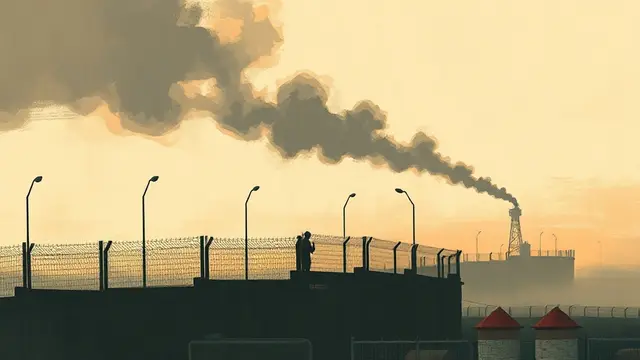
Amid escalating clashes with the Iran-backed Houthi rebels in Yemen, Iran has issued a warning to Saudi Arabia that its new defense alliance with Turkey and Pakistan will not guarantee its security. A senior Houthi official told CNN that their attacks against Saudi Arabia are independent of Tehran’s direct orders, emphasizing that the economic and air blockade imposed by Saudi Arabia on Houthi-controlled areas has created the world’s worst man-made humanitarian crisis, justifying their decisive response. The official also claimed recent Houthi strikes were preemptive, responding to Saudi preparations for a ground invasion.
Meanwhile, the UAE reported that an ADNOC commercial vessel was hit by a missile while transiting the Strait of Hormuz, condemning the attack as a blatant violation of UN Security Council resolutions protecting freedom of navigation. The UAE accused Iran’s Revolutionary Guards of piracy and threatening regional stability and global energy security. Qatar, Saudi Arabia, and Jordan also condemned the incident. Iranian President Masoud Pezeshkian blamed the U.S. for violating the Hormuz Memorandum of Understanding, prompting Iran’s retaliatory actions.
Iranian Foreign Minister Abbas Araghchi announced near completion of negotiations with Oman on a new navigation route through the Strait of Hormuz, though reopening the strait depends on other conditions. He criticized the previous traffic separation scheme as unacceptable to Tehran and called for a new route, acknowledging technical and legal complexities requiring a temporary arrangement before finalizing a new path.
Pakistan’s Defense Minister Khawaja Muhammad Asif condemned Israel, urging the Islamic world to unite against the common threat Israel poses, following the Saudi-Turkey-Pakistan defense pact. Concurrently, U.S. Joint Chiefs Chairman General Dan McKenzie is reportedly seeking an exit strategy from the ongoing conflict with Iran, now in its sixth month despite ceasefires and broken agreements. Sources told CNN that McKenzie warned President Trump’s team that military escalation risks backfiring and that air power alone is unlikely to achieve U.S. goals, including dismantling Iran’s nuclear program and restoring free navigation in the Strait of Hormuz.
While some in the U.S. administration, including CENTCOM and Israel, supported intensifying military action, Trump canceled planned strikes after Middle Eastern leaders expressed concerns about Iranian retaliatory attacks on energy infrastructure. However, future strikes remain possible, according to a senior U.S. official.
מוזכרים
אותו אירוע, כפי שכל מערכת דיווחה עליו בנפרד. פתחו כמה דיווחים כדי להשוות מה כל מערכת מדגישה, ומה היא משאירה בחוץ.
מרכז 2ימין 1חרדית 1


