
US Faces Major Challenge in Targeting Iran’s Deeply Buried 'Mount Makoush' Nuclear Facility
The US is confronting a major challenge in targeting Iran’s fortified underground nuclear site "Mount Makoush," which is deeply buried and resistant to airstrikes. The facility may house enriched uranium close to weapons-grade levels, necessitating potentially large-scale ground operations. Advanced bunker-busting bombs exist but may not suffice alone, while Israel’s targeted killings of Iranian nuclear scientists continue to impede Iran’s weapon development.
הידיעה ב-6 שורות · תקציר של baba
- Mount Makoush is a deeply buried Iranian nuclear facility near Natanz, highly resistant to airstrikes.
- US President Trump has vowed to address this strategic site, possibly requiring large ground forces.
- The US developed the massive GBU-57 bunker-buster bomb to target such deep underground facilities.
- Iran holds about 450 kg of uranium enriched to 60%, close to weapons-grade levels.
- Israel has targeted Iranian nuclear scientists to delay Iran’s nuclear weapon development.
- Destroying Mount Makoush likely requires ground assault, as aerial attacks alone are insufficient.
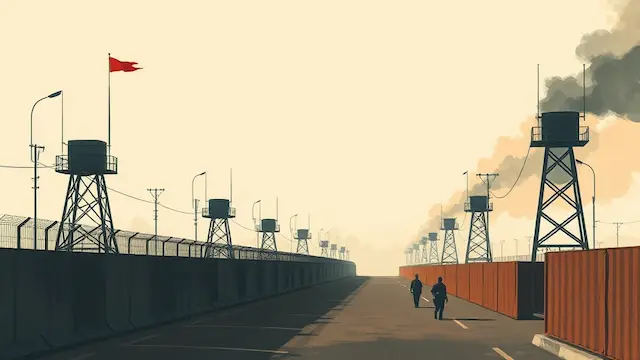
The strategic Iranian underground complex known as "Mount Makoush," located south of the Natanz uranium enrichment site, has recently drawn extensive attention from US President Donald Trump, who has vowed to address it. This fortified facility is considered one of the most advanced in Iran, with a tunnel network carved deeply into rock, making it highly resistant to aerial bombardment and conventional weaponry. Intelligence based on satellite imagery reveals extensive excavation debris, indicating a complex tunnel system that may house centrifuge assembly operations or enriched uranium stockpiles.
Experts believe the only viable method to destroy Mount Makoush is through a large-scale ground assault, potentially requiring significant deployment of US ground forces. The US possesses bunker-busting munitions like Boeing’s GBU-57 Massive Ordnance Penetrator, a 13.6-ton bomb designed to penetrate up to 80 meters underground. Since the early 2000s, the US has developed and deployed these bombs specifically to counter Iran’s deeply buried nuclear infrastructure, having dropped 14 such bombs on the nearby Fordow facility.
Iran’s enriched uranium stockpile, reportedly around 450 kilograms at 60% enrichment, places the country close to a weapons-grade threshold. Nuclear experts note that increasing enrichment from 60% to 90% is not a significant scientific hurdle. Given that approximately 42 kilograms of highly enriched uranium are needed for a nuclear weapon, Iran’s current stockpile could theoretically produce about ten bombs if fully processed. It is suspected that this enriched uranium has been moved to the secure Mount Makoush facility.
While enriched uranium is critical, Iran still faces challenges in developing the nuclear weapon’s triggering mechanism, known as the "explosive lens" or "weapon assembly." Israel has been linked to targeted killings of Iranian nuclear scientists involved in this area, including Mohsen Fakhrizadeh and others eliminated during operations such as "Operation Shagat Ha'ari." These efforts aim to delay Iran’s progress toward a functional nuclear weapon.
In summary, Mount Makoush represents a formidable obstacle to US and allied efforts to halt Iran’s nuclear ambitions, requiring advanced military capabilities and possibly ground operations to neutralize. The situation underscores the ongoing tension and complexity surrounding Iran’s nuclear program and regional security.
מוזכרים
אותו אירוע, כפי שכל מערכת דיווחה עליו בנפרד. פתחו כמה דיווחים כדי להשוות מה כל מערכת מדגישה, ומה היא משאירה בחוץ.
מרכז 1אחרים 1

