
US Imposes Naval Blockade on Iran Amid Rising Tensions and Military Strikes
The US has launched a naval blockade in the Middle East targeting Iran, deploying warships and fighter jets amid escalating tensions. President Trump threatened further strikes and control over the Strait of Hormuz, while China warned against interference, supporting Iran. The situation raises fears of a wider regional conflict.
הידיעה ב-6 שורות · תקציר של baba
- US military initiates naval blockade in the Middle East targeting Iran.
- Over 20 US warships and hundreds of fighter jets deployed to enforce restrictions.
- President Trump threatens strikes on Iranian nuclear sites and control of Strait of Hormuz.
- Trump praises relations with Israeli PM Netanyahu but avoids discussing Israeli role.
- China warns US against interference, affirming Iran's control of Strait of Hormuz.
- Tensions escalate with risk of broader regional conflict involving US, Iran, and China.
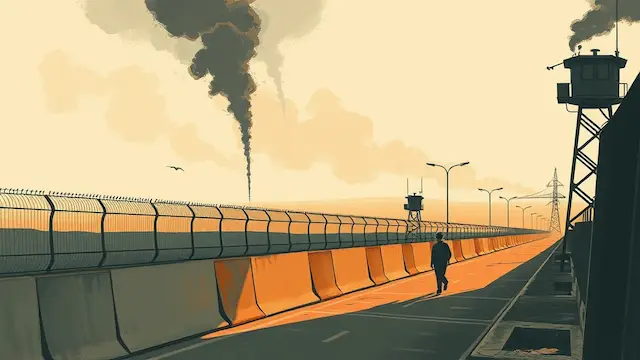
The United States military announced on Tuesday the initiation of a naval blockade in the Middle East aimed at enforcing maritime and airspace restrictions around Iran. According to the Pentagon, a special task force comprising over 20 warships and hundreds of fighter jets has been deployed to the region. The US Central Command stated, "Our forces are alert, lethal, and ready," confirming the start of the operation.
US President Donald Trump made strong statements regarding Iran and the strategic Strait of Hormuz, declaring that the US military is striking Iran "tonight and tomorrow." He threatened to destroy the underground site at Fordow near the Natanz nuclear facility and asserted US control over the Strait of Hormuz, saying, "We will be the ones controlling the Strait of Hormuz and will get paid for it." Trump also accused Iran of breaking previous agreements and refused to comment on Israeli involvement in the attacks. He praised his relationship with Israeli Prime Minister Benjamin Netanyahu, noting occasional disagreements but mutual respect.
In response, Chinese National Security Secretary Admiral Dong Jun issued a rare warning to the Trump administration, emphasizing China's legal navigation through the Strait of Hormuz and its energy and trade agreements with Iran. Dong stated, "Iran controls the Strait of Hormuz, and it will remain open for us," signaling China's support for Iran and cautioning against interference. This statement raises concerns about potential direct Chinese involvement, threatening regional stability.
These developments mark a significant escalation in US-Iran tensions, with the naval blockade and US strikes on one side, and Iranian and Chinese responses on the other, heightening fears of a broader regional conflict. Further updates are expected as the situation evolves.
מוזכרים
אותו אירוע, כפי שכל מערכת דיווחה עליו בנפרד. פתחו כמה דיווחים כדי להשוות מה כל מערכת מדגישה, ומה היא משאירה בחוץ.
מרכז 3ימין 3חרדית 2אחרים 2








