
IDF Returns to Training to Boost Readiness After Years of War
The Israel Defense Forces (IDF) is resuming training exercises to improve unit readiness and soldier professionalism after years of continuous conflict. Chief of Staff Lt. Gen. Eyal Zamir visited a drill emphasizing the need to reinforce fundamental military skills and systemic coordination. The training aims to address command and control gaps exposed during the war, particularly after rapid promotions of officers. However, the IDF must balance these training needs with ongoing operational commitments, leading to the development of shorter, more flexible training models.
הידיעה ב-5 שורות · תקציר של baba
- The IDF is resuming training to enhance unit readiness and soldier professionalism after years of continuous conflict.
- Chief of Staff Lt. Gen. Eyal Zamir stressed the importance of training for fundamental military skills and systemic coordination.
- Training exercises focus on improving command and control, addressing gaps exposed during the October 7th attacks.
- Rapid officer promotions during the war created command and professional gaps that current training aims to fill.
- The IDF is developing shorter, flexible training models to balance ongoing operations with readiness needs.
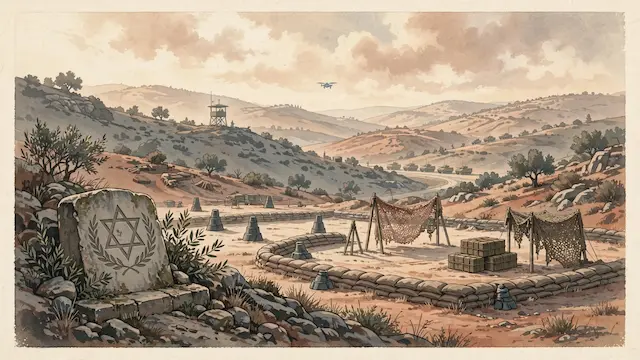
The Israel Defense Forces (IDF) is resuming its training regimen after nearly three years of continuous conflict, aiming to enhance unit readiness, soldier professionalism, and command and control capabilities. This initiative comes amid ongoing operations in Gaza, Lebanon, and Judea and Samaria, as well as maintaining defenses along borders and preparing for potential escalation with Iran.
Chief of Staff Lt. Gen. Eyal Zamir emphasized the importance of renewed training during a visit to a drill by the 50th Battalion of the Nahal Brigade at the National Land Training Center. The exercise simulated offensive combat and urban warfare scenarios, integrating advanced capabilities. Zamir stated, "After three years of fighting, the IDF is returning to training. We continue to strengthen defenses on all borders and protect communities from forward defense areas; in parallel, we are increasing the IDF's readiness for a return to combat."
He stressed that training is crucial not only for practicing operational scenarios but also for reinforcing fundamental military skills, norms, standards, individual professionalism, discipline, and unit cohesion. This reflects a key IDF realization: extensive operational experience cannot replace structured training. Commanders and soldiers who have gained significant battlefield experience need dedicated time to practice, learn, and improve their skills, while also integrating new operational methods and technologies developed during the war.
The current training exercises are designed to test the entire system, focusing on how senior command makes decisions, how operational situational awareness is shared across ranks, how forces coordinate, and how commanders manage multiple units in various theaters. This emphasis on systemic coordination and command and control is a direct response to lessons learned from the October 7th attacks, which exposed severe failures in situational awareness and inter-force coordination.
Many career officers were rapidly promoted during the war due to operational needs and personnel shortages, often entering new roles without sufficient training periods to master their responsibilities or thoroughly understand their units' capabilities. The current training aims to bridge these professional and command gaps. However, the IDF faces the challenge of balancing ongoing operational commitments with the need for extended, uninterrupted training periods. To address this, the National Land Training Center is developing shorter, more flexible training models to allow units to achieve meaningful readiness despite unstable operational schedules, seeking to strike a balance between immediate operational needs and long-term force building.
להמשיך לעקוב
מוזכרים
אותו אירוע, כפי שכל מערכת דיווחה עליו בנפרד. פתחו כמה דיווחים כדי להשוות מה כל מערכת מדגישה, ומה היא משאירה בחוץ.
מרכז 1אחרים 1

לא אותו אירוע: ידיעות אחרות שחולקות עם הידיעה הזו אנשים, מקומות או נושא. רקע, תגובות והמשכים.
