
Netanyahu's Knesset Speech Sparks Outrage and Walkouts
תורגם ותומצת מתוך Cursorinfo על ידי baba
Prime Minister Benjamin Netanyahu's speech at the Knesset opening on November 10 devolved into a scandal, marked by sharp criticism of Arab parties and walkouts by opposition lawmakers. Yair Golan and Gilad Kariv of the "Democrats" left or were removed from the plenum. "BeYahad" leader Bennet and Gadi Eisenkot also criticized Netanyahu, with Eisenkot calling for his immediate removal. The incident highlights deep divisions within Israeli politics.
הידיעה ב-5 שורות · תקציר של baba
- Prime Minister Benjamin Netanyahu's Knesset speech on November 10 was disrupted by scandal and walkouts.
- Yair Golan and Gilad Kariv of the "Democrats" party reacted strongly to Netanyahu's remarks.
- "BeYahad" leader Bennet interrupted Netanyahu, raising issues of October 7 failures and Qatari ties.
- Gadi Eisenkot criticized Netanyahu, calling for his immediate resignation and a unity government.
- The incident underscores deep political divisions and security concerns within Israel.
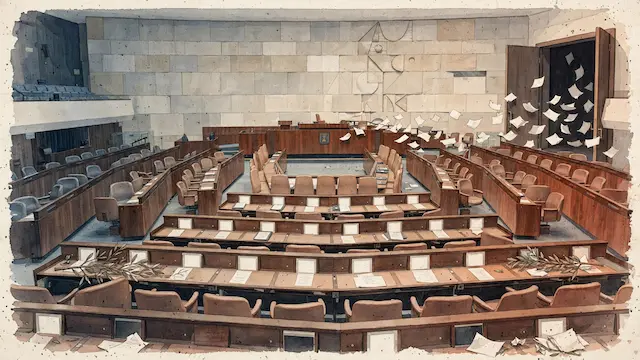
Prime Minister Benjamin Netanyahu's address at the opening of the 26th Knesset on November 10 was disrupted by a significant scandal. During a traditional photo session with faction leaders, Netanyahu reiterated his call for a government of national unity but then launched into sharp criticism of Arab parties and the "change bloc's" negotiations with Ra'am. His speech provoked a strong reaction from lawmakers. Yair Golan, leader of the "Democrats" party, demonstratively left the plenum, while his party colleague Gilad Kariv was removed after repeated interjections. Netanyahu accused the leaders of the "change bloc" of intending to form a government with the support of "supporters of terrorism," claiming they misunderstood the intentions of their Arab partners. He cited an instance where a Ra'am member reportedly referred to Jewish settlers in Tel Aviv as "settlers."
Following Netanyahu's extended criticism of Arab parties, "BeYahad" leader Bennet interrupted the Prime Minister, reminding him of accusations regarding ties to Qatari advisors and the need to investigate the failures of October 7. Bennet later re-engaged in a dispute with Netanyahu over the necessity of investigating alleged foreign interference in elections. He also brought up the investigation into the October 7 failures, Netanyahu's alleged connections to Qatari advisors, and the failure to designate Qatar as a hostile state. Itamar Ben-Gvir intervened, accusing Bennet of being willing to form a government with the support of the "United Arab List." Sara Netanyahu also joined the exchange, shouting remarks at Bennet.
After Netanyahu's speech concluded, Gadi Eisenkot strongly criticized the Prime Minister, accusing him of using the official Knesset opening ceremony to incite hatred and division. Eisenkot stated that Netanyahu should no longer hold office and called for the immediate formation of a government of national unity, asserting that Netanyahu's continued leadership deepens Israel's divisions and threatens its security.
In response to the exchanges, Bennet commented that such behavior would not achieve national unity. Yair Golan accused the Prime Minister of inciting hostility towards the Arab sector and attempting to cling to power, expressing confidence that Netanyahu would soon move to the opposition and a new government would be formed to rectify the situation. Earlier reports indicated that consultations to form a government under Gadi Eisenkot were ongoing but faced significant disagreements.
מוזכרים
אותו אירוע, כפי שכל מערכת דיווחה עליו בנפרד. פתחו כמה דיווחים כדי להשוות מה כל מערכת מדגישה, ומה היא משאירה בחוץ.
מרכז 1אחרים 1

לא אותו אירוע: ידיעות אחרות שחולקות עם הידיעה הזו אנשים, מקומות או נושא. רקע, תגובות והמשכים.




