
Israelis Flock to Shopping on Election Day, Credit Card Spending Soars
Israelis spent NIS 1.14 billion on credit cards on election day, a 41.2% increase from the previous election, according to Shva data. This surge was driven by strong performance in the fashion and restaurant sectors, with a notable shift towards physical retail over online shopping. Shopping centers reported significantly higher visitor numbers and sales, with some areas like the Sharon region seeing a threefold increase in purchases. The day's spending is on track to potentially break election day records.
הידיעה ב-5 שורות · תקציר של baba
- Israelis spent NIS 1.14 billion on credit cards on election day, a 41.2% increase from 2022.
- Fashion and restaurant sectors saw significant transaction increases on election day.
- Physical retail transactions surged 58% while online sales dropped 44% on election day.
- Shopping centers reported visitor numbers up to threefold compared to regular days.
- The Sharon region saw a threefold increase in purchases on election day.
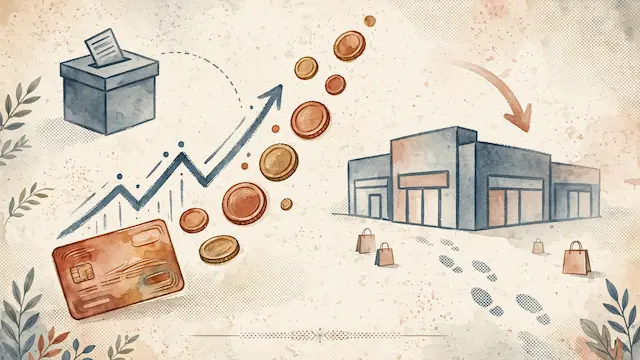
Israelis significantly increased their spending on credit cards on election day, taking advantage of the national holiday for shopping, dining, and entertainment. Data from Shva, the national payment system operator, revealed that between 8:00 AM and 5:00 PM, credit card expenditures reached NIS 1.14 billion, a 41.2% surge compared to the same period during the previous election day on November 1, 2022. This spending level is also 12.9% higher than the NIS 1.01 billion spent during the same hours on election day for local authorities in January 2024, which previously held the record for election day spending at NIS 1.591 billion for the entire day.
Fintech company Hyp reported a 4.3% increase in transaction volume by 5:00 PM compared to the previous Tuesday, a regular shopping day. The fashion industry led this growth with a 148% rise in transactions and a 9.8% increase in average transaction value, driven by discounts of 15%-50%. Restaurants also saw a 44.2% increase in transactions, with average spending up by 47.5%. Conversely, food delivery services experienced a 15.3% drop in transactions, likely because people were not ordering food for work and were out of their homes.
Analysis from Isracard indicated a preference for physical shopping over online purchases, with a 58% rise in in-store transactions and a 44% decrease in online sales. The apparel and footwear sector was an exception, showing a 35% increase in online sales alongside a 140% surge in physical store transactions. The electronics sector saw a 58% decline in online shopping but a 126% increase in physical store transactions.
Geographically, while Eilat saw a 7% decrease in purchases, the Sharon region experienced a threefold increase, and Hadera and Krayot saw a 2.5-fold rise. Tel Aviv showed a more modest 0.6-fold increase. Retail chains like ALM reported a 280% jump in store visitors, exceeding the previous election day by 13%. Popular items included the iPhone Duo, air purifiers, and robotic vacuum cleaners. Shopping centers like Big Galilot and Dizengoff Center reported significantly higher visitor numbers and sales compared to regular days and even holidays. Ofer Malls noted a threefold increase in visitor volume compared to a regular day, with Ramat Aviv, Petah Tikva, Rehovot, Haifa, and Beer Sheva malls being particularly busy.
מוזכרים
אותו אירוע, כפי שכל מערכת דיווחה עליו בנפרד. פתחו כמה דיווחים כדי להשוות מה כל מערכת מדגישה, ומה היא משאירה בחוץ.
מרכז 2אחרים 1


לא אותו אירוע: ידיעות אחרות שחולקות עם הידיעה הזו אנשים, מקומות או נושא. רקע, תגובות והמשכים.


