
Israelis Vote for 26th Knesset Amid High Tensions
תורגם ותומצת מתוך Panet על ידי baba
Over 7.3 million Israelis are voting today for the 26th Knesset, with polling stations open from 7 a.m. to 10 p.m. The election is taking place amid high polarization and security concerns. Preliminary results are expected overnight, with final results anticipated by Thursday afternoon after the counting of approximately 600,000 to 650,000 "double envelope" votes. Free public transportation is available on intercity buses and trains to encourage voter turnout.
הידיעה ב-6 שורות · תקציר של baba
- Over 7.3 million Israelis are voting today for the 26th Knesset, with polls open from 7 a.m. to 10 p.m.
- The election is described as pivotal and a referendum on Prime Minister Benjamin Netanyahu's popularity.
- Around 20,000 police officers and security personnel are deployed nationwide for election security.
- Free intercity bus and train travel is offered to voters until the end of election day.
- Preliminary results are expected overnight, with final results anticipated by Thursday afternoon.
- An estimated 600,000 to 650,000 "double envelope" votes could influence up to 15 Knesset seats.
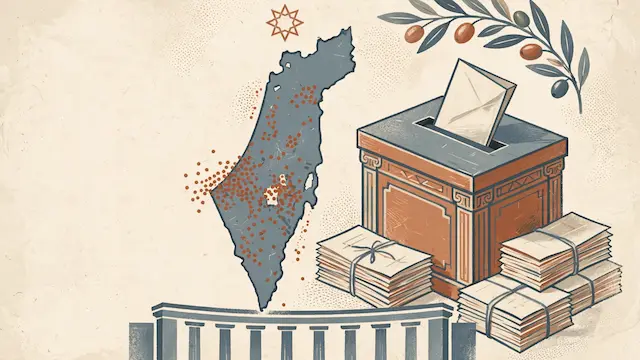
Over 7.3 million Israeli voters are heading to the polls today, Tuesday, to elect representatives for the 26th Knesset. The Central Elections Committee, headed by Supreme Court Justice Noam Sohlberg, has prepared 12,018 ballot boxes, with 6,209 of them readily available. Most polling stations will open at 7 a.m. and close at 10 p.m., though some in smaller towns, hospitals, prisons, and nursing homes will close an hour earlier at 8 p.m.
Following the closure of the last ballot box, an extensive logistical operation managed by the Central Elections Committee will commence. Twenty district election committees will oversee the voting and vote counting process. To facilitate voter access, the government is providing free travel on approximately 600 public bus routes and free train service.
The budget for the 26th Knesset elections is approximately 690 million shekels. The police have announced full readiness, deploying around 20,000 officers, Border Police, and volunteers across the country, with some forces operating covertly. The elections are taking place amidst significant polarization in Israeli society, over three years after the October 7th attacks, and under unusual security conditions, with threats of renewed US-Israeli action against Iran. Analysts describe these elections as pivotal, serving as a referendum on the popularity of Prime Minister Benjamin Netanyahu, who has served as premier longer than anyone else in Israel's history.
Several parties are contesting the election, including "Yachad" led by Gadi Eisenkot, "Likud" led by Benjamin Netanyahu, "Yisrael Beiteinu" led by Avigdor Lieberman, "HaDemocratim" led by Yair Golan, "HaTzionut HaDatit" led by Bezalel Smotrich, "Otzma Yehudit" led by Itamar Ben-Gvir, "Shas" led by Aryeh Deri, "Yahadut HaTorah" led by Yaakov Asher, the "Joint List" led by Yousef Jabareen, and the "United Arab List" led by Mansour Abbas, among many others.
Free public transportation, including intercity buses for distances over 15 kilometers and all Israeli train routes, began yesterday evening and will continue until the end of election day services. This initiative does not cover intra-city bus routes. Preliminary results are expected overnight, with final results anticipated by Thursday afternoon after the counting of "double envelopes", ballots cast by those voting outside their registered polling stations, such as soldiers, diplomats, police, and prison staff. An estimated 600,000 to 650,000 Israelis will use these double envelopes, a record number that could influence up to 15 Knesset seats. Historically, these votes have had a limited but sometimes decisive impact on the political map, potentially shifting one or two seats. The composition of voters using double envelopes, which includes a higher proportion of active soldiers compared to the general population, may affect the final seat distribution among the competing lists.
מוזכרים
אותו אירוע, כפי שכל מערכת דיווחה עליו בנפרד. פתחו כמה דיווחים כדי להשוות מה כל מערכת מדגישה, ומה היא משאירה בחוץ.
שמאל 1מרכז 2ימין 3חרדית 2ערבית 2אחרים 3











לא אותו אירוע: ידיעות אחרות שחולקות עם הידיעה הזו אנשים, מקומות או נושא. רקע, תגובות והמשכים.



