
Iran Hosts Saudi, Turkish, Pakistani Officials Amid Regional Tensions
תורגם ותומצת מתוך Panet על ידי baba
Senior officials from Saudi Arabia, Turkey, and Pakistan met in Tehran with Iranian counterparts on Monday to discuss de-escalation amid regional conflicts, including Houthi attacks on Saudi Arabia. The Egyptian parliament authorized President el-Sisi to support Saudi Arabia against external threats. The meetings are the first high-level engagement between Iran and these nations since the regional conflict expanded. Discussions focused on regional security mechanisms and non-aggression, excluding Iran's nuclear program.
הידיעה ב-6 שורות · תקציר של baba
- Iran hosted senior officials from Saudi Arabia, Turkey, and Pakistan for de-escalation talks on Monday.
- The meetings are the first high-level engagement between Iran and these nations since regional conflict expansion.
- Egypt's parliament authorized President el-Sisi to support Saudi Arabia against external aggression.
- Houthi forces in Yemen continue to launch attacks targeting Saudi infrastructure.
- Discussions focused on establishing regional security mechanisms and a non-aggression network.
- Iran's nuclear program was excluded from the agenda pending resolution of its war-related demands.
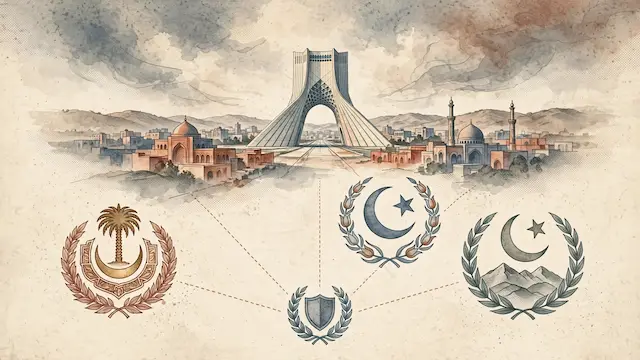
Senior officials from Saudi Arabia, Turkey, and Pakistan met with Iranian counterparts in Tehran on Monday as part of efforts to de-escalate regional conflicts. The meetings occurred while Yemen's Houthi group continues its attacks on Saudi Arabia, and Egypt's parliament approved a mandate for its president to defend the Kingdom against external aggression. These discussions mark the first high-level engagement between Iran and the three nations, signatories of the Mecca Defense Pact signed in August, since the conflict, initially involving US and Israeli strikes on Iran, expanded to include Saudi Arabia and Yemen. The Saudi Foreign Ministry stated the visit aims to "de-escalate tensions" and "encourage dialogue and diplomatic solutions," emphasizing the importance of opening negotiation channels to "prevent the return of military escalation in the region." Saudi and Iranian officials identified Saudi Arabia's Minister of Defense, Prince Khalid bin Salman, Pakistan's Army Chief Asim Munir, and Turkey's Intelligence Chief Ibrahim Kalin as the representatives from their respective countries. Iranian state media published images of Iranian President Masoud Pezeshkian, Foreign Minister Abbas Araghchi, and Supreme National Security Council Secretary Mohsen Rezaei participating in the meeting. Qatar and Pakistan have previously led mediation efforts, with Qatari mediators visiting Tehran on Sunday. Earlier mediation attempts contributed to a temporary ceasefire in June, which quickly collapsed as confrontations between Iran and the United States reignited. This was followed by clashes between Iran-aligned Houthis and US ally Saudi Arabia, opening a new front in the conflict. The wider regional war has disrupted shipping through the Strait of Hormuz, a vital energy trade route, leading to global oil and gas price increases. Gulf states have faced missile and drone attacks, and a new humanitarian crisis has emerged in Yemen. Tensions between Washington and Tehran have escalated recently, with US President Donald Trump indicating potential new military action against Iran. Iranian security officials informed Reuters that Tehran has detailed plans to attack maritime communication cables in the Gulf if the US and Israel launch new attacks. Earlier this year, the conflict ignited fighting between Israel and Iran-backed Hezbollah. The war has also negatively impacted Trump's popularity ahead of midterm elections. Iranian Foreign Ministry spokesperson Ismail Baghaei stated that Monday's discussions would cover "Israel's expansionist policies, developments in the Palestinian territories and Lebanon, and the repercussions of any US and Israeli military action against Iran." He added that the meeting, proposed during Munir's visit to Tehran last week, could be a first step toward establishing regional security mechanisms. A senior Pakistani security official noted the meeting's focus on building a regional non-aggression network, including US-Iran talks, Houthi attacks on Saudi Arabia, the Strait of Hormuz, and US sanctions on Iranian ports. An Iranian official clarified that the nuclear program would not be discussed until Tehran's demands for ending the war, including lifting US sanctions on its ports and oil exports, are met. US Vice President J.D. Vance previously stated Iran should reduce uranium enrichment to end the war. The Pakistani military's press office and the Turkish Foreign Ministry have not yet responded to requests for comment. Saudi Arabia has intensified its strikes against the Houthis since they seized strategic Red Sea coastal areas last month and advanced against Saudi-backed government forces. Houthi attacks have targeted Saudi airports, ports, and oil facilities. The Houthis claimed responsibility for attacking pumping stations on the East-West pipeline and Riyadh Airport on Monday. Saudi confirmation of these attacks is pending. Egypt's parliament approved by a two-thirds majority a mandate for President el-Sisi to "take all necessary measures to support the Kingdom of Saudi Arabia, following coordination between the two brotherly countries, to defend its lands, sovereignty, and holy sites against any external aggressions." Saudi Arabia is a key financial and political partner for Egypt, though not a signatory to the Mecca Defense Pact. The pact stipulates that signatories will use all necessary means to eliminate threats to the territorial integrity, sovereignty, or internationally recognized borders of any party. Ministers from Mecca Pact countries held an emergency meeting in Riyadh earlier this month, agreeing to ensure "rapid deployment" of forces and military capabilities to Saudi Arabia. Turkey's parliament began ratification procedures for the pact last week, which are ongoing, while Pakistan ratified it last week.
מוזכרים
אותו אירוע, כפי שכל מערכת דיווחה עליו בנפרד. פתחו כמה דיווחים כדי להשוות מה כל מערכת מדגישה, ומה היא משאירה בחוץ.
שמאל 1מרכז 3ערבית 1




לא אותו אירוע: ידיעות אחרות שחולקות עם הידיעה הזו אנשים, מקומות או נושא. רקע, תגובות והמשכים.




