
Arab Media Concerned Over Netanyahu's Potential Election Loss
Arab media are extensively covering Israel's elections, with many expressing concern over the potential outcome of Prime Minister Benjamin Netanyahu's defeat. Despite hopes for an end to his term, commentators doubt that opposition leader Gadi Eisenkot would bring about significant policy changes. Analysts believe that differences between candidates are stylistic rather than substantive on key regional issues, questioning if Israel can truly change course.
הידיעה ב-5 שורות · תקציר של baba
- Arab media express concern over potential Israeli election outcomes and Benjamin Netanyahu's possible defeat.
- Commentators doubt Gadi Eisenkot's victory would lead to significant strategic policy changes in Israel.
- Arab outlets warn of political stagnation and potential conflict renewal regardless of election results.
- The ability to form a 61-member coalition is seen as crucial for any potential government change.
- Regional issues like Iran, settlements, and Gaza show minimal policy differences between candidates.
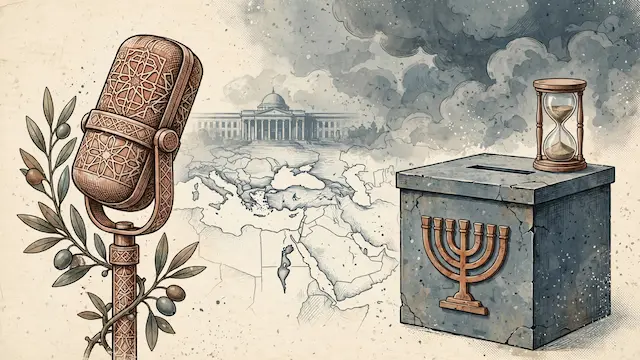
Leading Arab media outlets are extensively covering Israel's upcoming elections, expressing concern about the potential consequences of Prime Minister Benjamin Netanyahu's defeat. While some commentators hope for an end to Netanyahu's tenure, there is widespread skepticism that a victory for opposition leader Gadi Eisenkot would lead to a significant shift in Israeli policy.
Publications such as Al-Jazeera, Al-Sharq, Al-Araby Al-Jadeed, and the Palestinian newspaper Al-Quds, as well as Arab media within Israel, share a common sentiment. Even those who wish for Netanyahu's departure doubt that his successor would bring about strategic change. Al-Araby Al-Jadeed warned of political stagnation that could reignite conflict, noting that the elections occur after three years of fighting and amid Israel's damaged international standing. The outlet also pointed out that an opposition win would not guarantee a stable government.
Saudi channel Al-Sharq highlighted that while polls favor the "change bloc," this does not ensure Netanyahu's ouster. The key, according to the channel, lies in the ability to form a coalition of 61 Knesset members and the fate of parties hovering around the electoral threshold.
Arab media also assess that even a Netanyahu defeat might not alter the regional situation. Regarding Iran, settlements, the Gaza Strip, and the prospects for a Palestinian state, many analysts perceive stylistic differences between the candidates but minimal divergence in security policy. Consequently, for much of the Arab media, the Israeli election is not just a choice between Netanyahu and Eisenkot, but a test of whether Israel can change direction or will merely replace its leader.
לא אותו אירוע: ידיעות אחרות שחולקות עם הידיעה הזו אנשים, מקומות או נושא. רקע, תגובות והמשכים.



