
Israeli Health Basket Committee Debates 650 Million Shekel Allocation
תומצת מתוך Calcalist על ידי baba
Israel's Basket Committee began deliberations on allocating 650 million shekels for new medical treatments and technologies, a sum representing less than 1% of the national health budget. The committee, chaired by Prof. Dina Ben-Yehuda, balances medical evidence with compassion to decide which innovations will be publicly funded. Pharmaceutical companies actively lobby for their products' inclusion, while the Ministry of Health's Director General, Moshe Bar Siman Tov, noted the budget must also cover other critical health needs.
הידיעה ב-6 שורות · תקציר של baba
- Israel's Basket Committee is allocating 650 million shekels for new medical treatments and technologies.
- This allocation represents less than 1% of the total national health budget, which is projected to reach 85 billion shekels by 2026.
- The committee balances medical evidence, social values, and compassion in its decision-making process.
- Chairperson Prof. Dina Ben-Yehuda highlighted the difficult choices and the human impact of inclusion or exclusion.
- Pharmaceutical companies engage in significant lobbying efforts to influence the committee's decisions.
- The budget must also address competing needs in mental health, rehabilitation, and infrastructure.
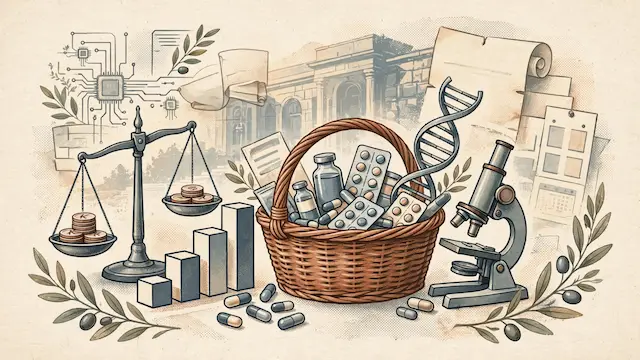
The Israeli Basket Committee convened to discuss the allocation of 650 million shekels for new medications and medical technologies, a sum that represents less than 1% of the total health budget. This annual addition to the health basket, which covers services provided by health maintenance organizations (HMOs) to citizens with national health insurance, is crucial for patients whose necessary treatments are not yet included. In 2023, the total health basket cost approximately 80 billion shekels, with projections estimating it to reach 85 billion shekels by 2026. The committee's budget is a supplement for new inclusions, not the entirety of public spending on drugs, which exceeded 14 billion shekels in 2024, representing over 18% of the health basket.
The committee's work involves evaluating new technologies and treatments based on medical evidence, social considerations, and ethical values, within the allocated budget. Chairperson Prof. Dina Ben-Yehuda emphasized a dual approach of data-driven medicine and compassion, stating, "We decide with our heads, but never without our hearts." She acknowledged the difficulty of the decisions, noting that "important medications and technologies will not be included" and that "every such waiver involves great sorrow and heartache."
Ben-Yehuda highlighted the human element behind the deliberations, explaining that abstract numbers become real faces and families waiting for news. She assured patients and families that "every request will be examined with utmost seriousness, fairness, and an open heart." The process is also influenced by pharmaceutical companies, which engage in intensive public relations and lobbying efforts to have their products included in public funding.
Director General of the Ministry of Health, Moshe Bar Siman Tov, explained that the budget is determined through multi-year agreements with the Treasury and must balance competing needs, including mental health, rehabilitation, physician training, and infrastructure. He stressed that the additional funds aim to "advance the basket with new medications and services," determining which medical advancements become public rights and which remain out of reach for some patients.
אותו אירוע, כפי שכל מערכת דיווחה עליו בנפרד. פתחו כמה דיווחים כדי להשוות מה כל מערכת מדגישה, ומה היא משאירה בחוץ.
שמאל 1מרכז 1חרדית 1אחרים 1



לא אותו אירוע: ידיעות אחרות שחולקות עם הידיעה הזו אנשים, מקומות או נושא. רקע, תגובות והמשכים.


