
Israel's Supreme Court Bans Real-Time Vote Count Reporting to Parties
תומצת מתוך Kikar HaShabbat על ידי baba
Israel's Supreme Court has banned the real-time digital reporting of vote counts from polling stations to political parties. The ruling prevents representatives from sending ongoing turnout updates, even without personal voter data, to campaign headquarters. This decision limits parties' ability to monitor voting in real-time, forcing them to rely on official, aggregated data released by the Central Elections Committee. The court cited concerns about the lack of explicit legal authorization for such data transfers and potential misuse.
הידיעה ב-5 שורות · תקציר של baba
- Israel's Supreme Court banned real-time digital reporting of vote counts to political parties.
- The ruling prevents representatives from sending ongoing turnout updates from polling stations.
- Parties will now rely on official, aggregated data from the Central Elections Committee.
- The court cited concerns over lack of explicit legal authorization for data transfers.
- The decision limits parties' real-time monitoring capabilities on election day.
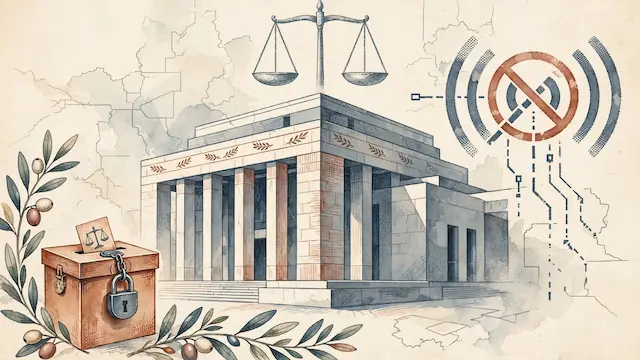
Israel's Supreme Court on Thursday prohibited the real-time digital transmission of vote count data from polling stations to political parties. This ruling prevents party representatives and observers from sending ongoing updates on voter turnout to campaign headquarters, even if the reports do not include identifying voter information. The decision stems from a dispute over a permit issued by the Central Elections Committee that allowed for the transfer of numerical data from polling stations to parties. The committee's intention was to enable campaign headquarters to monitor turnout rates and encourage supporters to vote. However, the permit led to a legal challenge, with the court expressing doubts about allowing such data transfer without explicit legal authorization.
The core of the dispute centered on whether polling station committee members and observers, acting in public roles, could transmit information directly from polling stations to party headquarters. The issue was brought to the forefront after Dean Livneh, acting Director General of the Central Elections Committee, issued a clarification on October 14 following a query from Ilan Bombach, the Likud's legal advisor. Livneh's clarification permitted counting voters at each station and transmitting the figure to parties digitally, provided no personal voter information was collected. The Central Elections Committee's stance was that a distinction existed between reporting the number of voters and identifying individuals who had voted. However, the Israeli Democracy Watch organization petitioned against this, arguing that even anonymous data transfer requires a legal basis and cannot be permitted by an administrative clarification alone.
During a hearing before Justices David Mintz, Khaled Kabub, and Ruth Ronen, the court questioned the necessity of parties receiving continuous reports from every polling station, given that the Elections Committee already publishes aggregated turnout data throughout the day. Justice Kabub expressed skepticism that this was merely a technical clarification, highlighting the difference between official data publication and ongoing information transfer by representatives nationwide. He warned of the potential accumulation of thousands, or even tens of thousands, of such reports. Justice Ronen questioned why the information needed to go directly to political factions, while Justice Mintz pointed to the possibility of parties using the data to intensify get-out-the-vote efforts in areas where they have supporters.
State and Likud representatives defended the permit, arguing that the reports could aid in monitoring the integrity of the voting process and identifying issues preventing citizens from voting. They also contended that encouraging voters to exercise their right to vote is a legitimate goal of party activity. This ruling follows a September 17 Supreme Court decision that prohibited the transfer of information about voters' identities to parties, deeming the fact that a person voted as personal information requiring specific legal authorization. That earlier ruling overturned a decision by the Central Elections Committee chairman, Justice Noam Sohlberg, and came in the context of the 'Elector' affair, which involved the use of digital systems for election management and voter tracking.
The prohibition on digitally transmitting numerical data limits the options available to parties for real-time monitoring of turnout rates through their representatives at polling stations. Instead of relying on direct reports from each station, campaign headquarters will now have to operate based on data and instructions published through the official channels of the Central Elections Committee.
מוזכרים
לא אותו אירוע: ידיעות אחרות שחולקות עם הידיעה הזו אנשים, מקומות או נושא. רקע, תגובות והמשכים.



