European Parliament Honors International Criminal Court With Sakharov Prize Amid US Pressure
תורגם ותומצת מתוך Jüdische Allgemeine על ידי baba
The European Parliament has awarded its prestigious Sakharov Prize to the International Criminal Court (ICC), recognizing its work in upholding international law amidst U.S. pressure. Parliament President Roberta Metsola announced the award, highlighting the court's role in prosecuting grave crimes. The ICC faces U.S. accusations of political bias, particularly concerning arrest warrants for Israeli leaders. Despite U.S. sanctions, several nations, including Germany, have reaffirmed their support for the court's independent operations.
הידיעה ב-5 שורות · תקציר של baba
- European Parliament awarded the Sakharov Prize to the International Criminal Court.
- The ICC faces significant pressure and sanctions from the United States.
- Arrest warrants for Israeli leaders have intensified scrutiny on the ICC.
- The U.S. accuses the ICC of political bias and has imposed sanctions.
- Several nations, including Germany, have rejected U.S. sanctions and support the ICC.
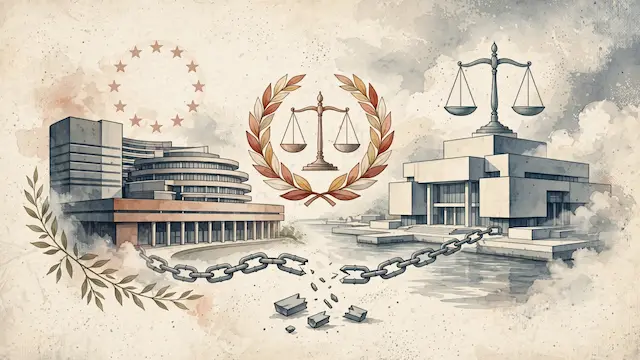
The European Parliament has awarded this year's Sakharov Prize to the International Criminal Court (ICC), an institution currently facing significant pressure from the United States. European Parliament President Roberta Metsola announced the award for the Hague-based court on Thursday in Strasbourg, emphasizing the EU's commitment to multilateralism and international institutions. She stated the prize recognizes the court's vital work in upholding international law and justice.
The ICC, established in 2002, prosecutes grave crimes including genocide, war crimes, and crimes against humanity, with 125 states as its contracting parties. The court expressed gratitude for the award, viewing it as crucial support for its mission and for those advocating for international law. In a statement released in The Hague, the ICC highlighted that the Sakharov Prize affirms the importance of independent judiciaries and underscores the necessity of continued international cooperation for the court to fulfill its mandate impartially.
The ICC has been under particular scrutiny due to an arrest warrant issued in 2024 for Israeli Prime Minister Benjamin Netanyahu and former Defense Minister Yoav Gallant, who are accused of war crimes in the Gaza Strip. Both deny the allegations. The United States has accused the ICC of political bias. Israel does not recognize the ICC's jurisdiction and has not ratified the Rome Statute, the treaty that established the court. The U.S., China, Russia, and Turkey have also not submitted to the court's jurisdiction.
However, the ICC considers itself competent to investigate alleged grave crimes in "Palestine," which it defines as encompassing the Gaza Strip, the West Bank, and East Jerusalem. The Trump administration has actively opposed the court, partly due to investigations into alleged war crimes by U.S. citizens in Afghanistan. In February 2025, then-President Donald Trump imposed sanctions on ICC staff, restricting their ability to use email or credit cards, and also sanctioned ICC President Tomoko Akane. Trump urged states to withdraw from the ICC, a call that has since been heeded by five nations. In early October, the U.S. government imposed sanctions directly on the ICC itself, though these are set to take effect after 180 days. Nine member states, including Germany, have rejected these sanctions and reaffirmed their support for the court. German Federal Minister of Justice Stefanie Hubig called the sanctions a dark day for international law and the concept of a rules-based world order.
The Sakharov Prize, established in 1988, honors individuals and organizations dedicated to defending human rights and freedom of expression, and includes a €50,000 award. The prize was awarded to the Venezuelan opposition in 2024 and to two imprisoned journalists in 2025. The S&D group in the European Parliament had proposed the ICC for the award. President Metsola also acknowledged other nominees, including Tundu Lissu for his work on free elections in Tanzania and the Rahimi sisters for their activism against the Iranian regime.
מוזכרים
אותו אירוע, כפי שכל מערכת דיווחה עליו בנפרד. פתחו כמה דיווחים כדי להשוות מה כל מערכת מדגישה, ומה היא משאירה בחוץ.
מרכז 3אחרים 1



לא אותו אירוע: ידיעות אחרות שחולקות עם הידיעה הזו אנשים, מקומות או נושא. רקע, תגובות והמשכים.
