
Houthi Victory at Bab al-Mandab Linked to Intelligence Failures
A New York Times investigation reveals that Houthi control of the Bab al-Mandab strait was facilitated by intelligence failures and a lack of decisive support from Saudi Arabia and the U.S. Despite warnings from Yemeni Commander Tarek Saleh and U.S. intelligence, a limited response allowed the Houthis to advance. The strategic waterway, crucial for global trade, fell after a rapid collapse of government defenses, resulting in significant casualties and displacement. Saudi Arabia has since launched a renewed offensive with U.S. intelligence support, but the outcome remains uncertain.
הידיעה ב-6 שורות · תקציר של baba
- Houthi seizure of Bab al-Mandab strait resulted from intelligence failures and insufficient allied support.
- Yemeni Commander Tarek Saleh's pleas for air cover and communication disruption were largely ignored.
- U.S. intelligence warned Saudi Arabia about Houthi buildup but did not provide air support.
- A rapid collapse of government defenses led to the loss of 1,800 square miles and hundreds of casualties.
- Saudi Arabia has launched a renewed offensive with U.S. intelligence to reclaim territory.
- The conflict has worsened a humanitarian crisis, displacing over 180,000 people.
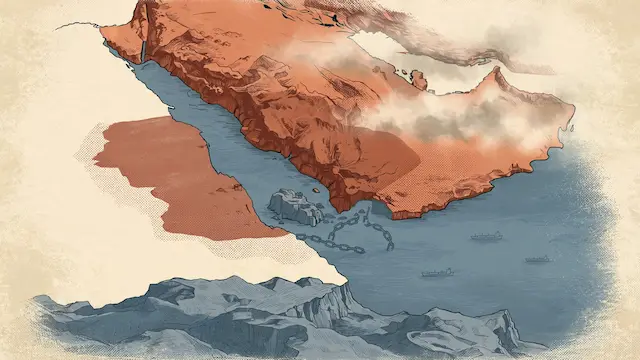
A comprehensive investigation by The New York Times, based on testimonies from over 15 individuals involved in or briefed on the fighting, reveals how the Houthis recently seized the strategically critical Bab al-Mandab strait. This occurred despite numerous urgent warnings conveyed to Washington and Riyadh. Yemeni Commander Tarek Saleh, who led forces in the city of Mokha, identified the Houthi plan to capture the area and control the strait, through which approximately 10% of global maritime trade passes. Saleh appealed to his allies for support, requesting air cover from Saudi Arabia and for the U.S. to disrupt Houthi communications. However, the response was limited. Washington provided intelligence and planning but refused airstrikes, while Saudi Arabia, despite possessing a powerful air force, did not intervene significantly, a decision that remains unexplained.
U.S. intelligence agencies had also repeatedly warned Saudi leadership for months about Houthi military buildup and urged them to reconcile rivalries among Yemeni government factions. The situation deteriorated further amid the broader conflict between Iran and the U.S./Israel, with the Yemeni ceasefire breaking down. Following a dispute over an alleged Saudi airstrike on Sanaa airport in July, the Houthis declared a naval blockade against Saudi vessels and launched missiles, prompting Saudi retaliatory strikes.
On August 9, the Houthis intensified their actions with missile and drone attacks on Mokha port to disrupt sea supply lines. The ground offensive began on September 3, with Saleh's forces claiming the Houthis deployed 80,000 fighters, allegedly with Iranian experts, though Houthi sources denied Tehran's involvement. The Houthis breached defenses in the mountainous Kadaha region, where cooperation between Saleh's forces and another faction had collapsed due to deep mistrust. Despite heavy artillery, missile, and drone barrages, and minimal Saudi air support, government forces held the mountains for five days.
The decisive collapse occurred on the evening of September 9, when communication lines were severed, and soldiers were ordered to retreat. Within a single night, government forces lost control of a central military camp east of Mokha, leading to a mass exodus south towards Aden. Approximately 1,800 square miles of territory, including a strategic island in the Bab al-Mandab strait, fell to the Houthis. According to Saleh's aides, at least 500 government soldiers were killed and over 1,500 wounded. Soldiers abandoned their weapons and military insignia to escape, with some documenting government armored vehicles fleeing chaotically.
The fall of Mokha has reignited full-scale regional warfare. Saudi Arabia has launched an intensive bombing campaign, supported by U.S. intelligence, to reclaim occupied territories. As of Tuesday, government forces reported halting and advancing, encircling Houthi pockets in the strait. Experts, however, caution that success remains uncertain, as does the post-conflict scenario. Riyadh has vowed to "eliminate" the Houthis, echoing the specter of its past costly war in the region. The Houthis, evolving from a religious movement to a formidable force that seized Sanaa in 2014, have consolidated power during a 2022 ceasefire, leaving a weak and divided Yemeni government. Researcher Gregory Johnson described the Yemeni government as "a fiction," spending more time fighting itself than the Houthis.
Control of Bab al-Mandab, a vital global trade chokepoint, grants the Houthis significant leverage beyond their missile launches towards Israel and the Red Sea during the Gaza war. Despite outward signals of de-escalation towards the international community, claiming their focus is solely on Saudi Arabia, rising oil prices may incentivize them to expand their influence. The ongoing conflict has exacerbated a humanitarian crisis, displacing over 180,000 people. Resident Hassan Sugair described the escape as "Judgment Day," with individuals solely focused on their own survival.
מוזכרים
אותו אירוע, כפי שכל מערכת דיווחה עליו בנפרד. פתחו כמה דיווחים כדי להשוות מה כל מערכת מדגישה, ומה היא משאירה בחוץ.
מרכז 1ימין 1
