
Israeli Workers Set for Higher Vacation-Allowance Payments After New Labor Deal
Israel’s Histadrut and the business sector have signed a deal that will significantly raise vacation allowance payments for millions of workers. The new rates take effect only after the labor minister signs an extension order, which will apply the agreement across the private sector.
הידיעה ב-5 שורות · תקציר של baba
- Vacation allowance payments will rise for millions of Israeli workers.
- The deal was signed by the Histadrut and the business sector presidency.
- The labor minister must still sign an extension order.
- Private-sector daily payment increases to 451.5 shekels.
- Eligibility starts after one year with the same employer.
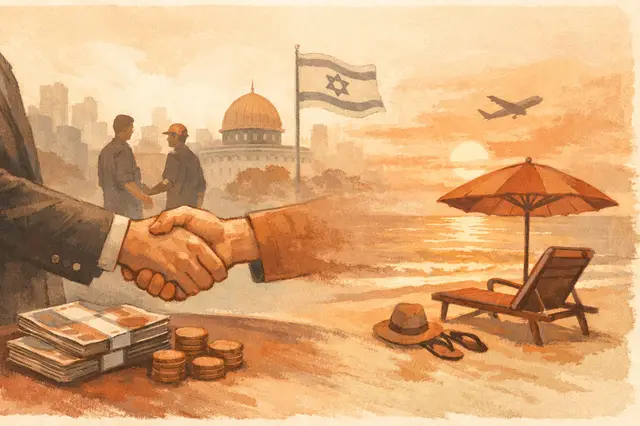
Israel’s Histadrut labor federation and the business sector’s presidency have signed a new agreement that will raise the country’s vacation allowance, known as "dmei havra'a," for millions of salaried workers. The deal comes after two difficult years of war-related economic contraction, wage freezes, and even a one-day cut in the allowance to help fund the state budget. The increase is meant to return some purchasing power to workers as prices and the cost of living keep rising.
According to the estimates in the report, about 2 million to 3 million Israelis will benefit. For the average employee, the change will add hundreds of shekels a year directly to the payslip, and the higher rate will apply only after the labor minister signs an "extension order" that makes the new terms binding on all private-sector employers. Once that happens, employers will no longer be allowed to pay the old rate.
The agreement was already finalized by Histadrut chairman Arnon Bar-David and Business Sector president Dovi Amitai. The article says the minister’s signature is a procedural step, but it is still required before the new terms take effect across the economy.
The article also lays out who qualifies and how much they will receive. Workers become eligible after one full year, 12 months, with the current employer, and the payment can be made retroactively for the first months of work. Part-time and hourly workers are also eligible, with payment calculated proportionally.
In the private sector, the daily allowance rises from 418 shekels to 451.5 shekels, pending the extension order. In the public sector, it rises to 511.6 shekels from 471.4 shekels. The number of paid days depends on seniority, starting at 5 days in the first year and reaching 10 days from the 20th year onward. In most workplaces, the payment is made once a year in the summer, usually between June and September, though employers and workers may agree to spread it over 12 monthly installments or replace it with a fully funded vacation of at least equal value.
אותו אירוע, כפי שכל מערכת דיווחה עליו בנפרד. פתחו כמה דיווחים כדי להשוות מה כל מערכת מדגישה, ומה היא משאירה בחוץ.
מרכז 4ימין 3חרדית 2אחרים 2










