
U.S. Suspends Sanctions on Iranian Oil for 60 Days Amid Ongoing Talks
The U.S. has suspended sanctions on Iranian oil until August 21 as part of ongoing talks with Tehran. The move could let Iran sell more oil while prices remain above prewar levels and Strait of Hormuz traffic is still constrained.
הידיעה ב-5 שורות · תקציר של baba
- U.S. sanctions relief on Iranian oil runs through August 21.
- The move is tied to talks in Switzerland involving Pakistan and Qatar.
- The order covers production, sale, transport and unloading of Iranian oil.
- Brent oil is at $78, below wartime highs but above early-year levels.
- Strait of Hormuz traffic remains limited despite the memorandum.
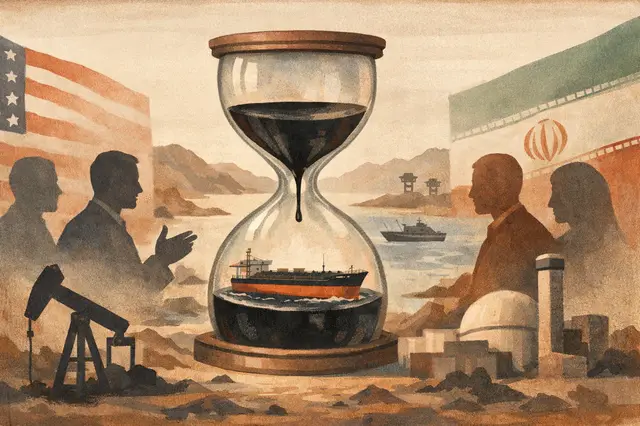
The United States has lifted sanctions on Iranian oil through August 21, according to a document from the Office of Foreign Assets Control, the Treasury Department’s sanctions enforcement arm. The move follows a memorandum of understanding being negotiated between Washington and Tehran, with talks taking place in Switzerland under Pakistani sponsorship and in cooperation with Qatar.
The published order removes from the sanctions list products considered essential for the production, sale, transport and unloading of crude oil, petrochemical products and petroleum products of Iranian origin, including money transfers involving blocked vessels. In practice, it means Iranian oil, previously barred from sale, will become a commodity that many more parties can handle.
The article says this is a reversal of the U.S. approach. At the start of the war, sanctions on Iranian and Russian oil were eased to try to lower prices, but after the U.S. failed to open the Strait of Hormuz, which Iran had blocked, and Iranian oil revenues kept rising because of higher prices, Washington restored sanctions and imposed its own naval blockade on Iran.
Oil prices have fallen sharply since the memorandum was signed, but Brent is still at $78 a barrel, below wartime peaks above $100 and $110, yet above the roughly $60 level seen at the start of the year. Although the understanding is supposed to reopen the Strait of Hormuz, traffic there remains limited and will take time to normalize, especially in the central channel away from the coasts of Iran and Oman. The result is that Iran is expected to regain the ability to sell oil while prices remain relatively high.
מוזכרים
אותו אירוע, כפי שכל מערכת דיווחה עליו בנפרד. פתחו כמה דיווחים כדי להשוות מה כל מערכת מדגישה, ומה היא משאירה בחוץ.
מרכז 3ימין 2חרדית 2אחרים 2







