
U.S. and Iran Reach 60-Day Framework After High-Pressure Talks
The United States and Iran agreed on a 60-day framework after 18 hours of talks mediated by Qatar and Pakistan. The deal covers a direct line to manage Strait of Hormuz incidents, oil sanctions relief, and a Lebanon de-escalation mechanism. Technical teams will remain in Switzerland this week to continue negotiations.
הידיעה ב-5 שורות · תקציר של baba
- Talks produced a 60-day roadmap after 18 hours of discussions.
- Qatar and Pakistan mediated a direct line for Hormuz incidents.
- Washington and Tehran agreed on oil sanctions relief and oversight bodies.
- A Lebanon de-escalation channel was added despite ongoing ceasefire tensions.
- Technical teams stay in Switzerland this week to finish unresolved issues.
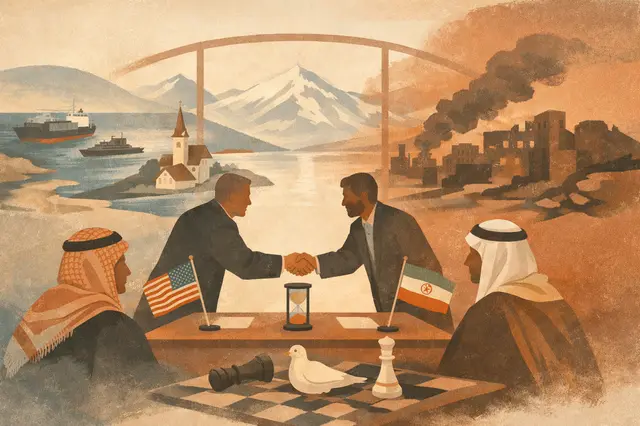
After intense, tense talks mediated by Qatar and Pakistan, Washington and Tehran agreed on a roadmap to settle disputes and stabilize the region. The 18-hour round ended overnight between Sunday and Monday, with the mediators saying the sides reached understandings on a direct communication line to prevent incidents at sea, a high-level political oversight mechanism, and a plan to lift oil-related sanctions. The parties also set a 60-day target for finalizing a broader deal, including a special de-escalation channel for Lebanon.
The talks were nearly derailed by President Donald Trump’s harsh rhetoric. In a Fox News interview, he threatened that the United States could “take over” the Strait of Hormuz and used abusive language toward Iranians, warning that if they shut it they would have no country and could not even return home. Iranian Foreign Ministry spokesman Esmaeil Baghaei said Tehran initially told the mediators it did not want to continue in the four-way format after the threats, but Qatar and Pakistan kept the discussions going in technical formats.
According to the framework, the direct communication line for incidents in the Strait of Hormuz will operate for 60 days. Iran committed to do everything possible to ensure safe, free passage for commercial ships between the Persian Gulf and the Gulf of Oman. A “high-level committee” will supervise the political process and lead working groups on nuclear issues, sanctions relief, and monitoring and dispute resolution.
Iranian Foreign Minister Abbas Araghchi said Washington approved a waiver on oil sanctions and opened the way to releasing frozen Iranian assets abroad. Iranian economic expert Hossein Korbanzade said a draft agreement on temporary exemption from sanctions on oil and its derivatives had been completed, and Araghchi said a “large-scale national development and reconstruction plan” had begun. The mediators also outlined a Lebanon de-escalation chamber aimed at ending military activity there, despite repeated ceasefire violations attributed to Hezbollah and after five soldiers were killed over the weekend. Israel agreed to hold fire outside the yellow line to allow the talks to continue, and technical teams will remain in Switzerland this week to work through the remaining issues.
מוזכרים
אותו אירוע, כפי שכל מערכת דיווחה עליו בנפרד. פתחו כמה דיווחים כדי להשוות מה כל מערכת מדגישה, ומה היא משאירה בחוץ.
מרכז 3ימין 3חרדית 1אחרים 2








