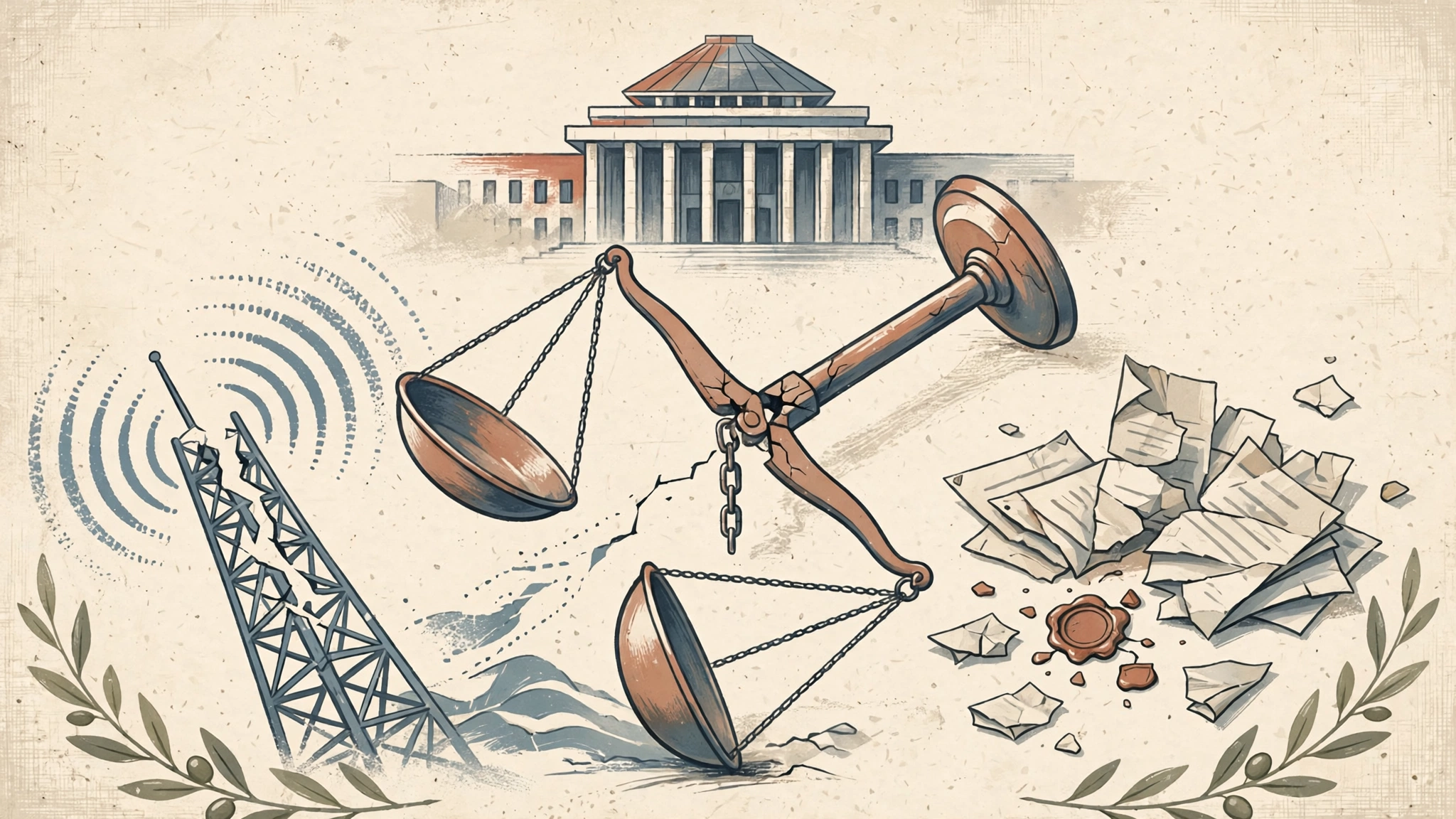
Supreme Court Overturns Government Appointments to Second Authority

Israel's Supreme Court unanimously annulled the government's appointments to the Second Authority for Television and Radio, ruling that the process was flawed and raised significant concerns about conflicts of interest and bias. The court, in a decision penned by Supreme Court President Isaac Amit, ordered the cancellation of Yifat Ben-Haimovich's appointment as chairwoman and Kineret Barashi and Haim Shine's appointments as council members.
The ruling stemmed from five petitions filed by various groups, including News 12, the Journalists Association, and the Movement for Quality Government. Petitioners argued the appointments were rushed, lacked proper legal and factual basis, and were intended to obstruct the sale of Channel 13. Concerns were also raised about the candidates' past public statements against media outlets they would oversee, suggesting a lack of objectivity.
A central issue was Yifat Ben-Haimovich's prior lawsuit against News 12. President Amit highlighted the inherent conflict of interest in a regulator pursuing a defamation case against a major broadcaster under her purview, especially since she ultimately lost the case. The court also found that Prime Minister Benjamin Netanyahu violated conflict of interest rules by promoting Ben-Haimovich's appointment, as she had testified in his criminal trial. The court rejected the government's argument that the conflict was no longer relevant after her testimony concluded, stating the prohibition also prevents the appearance of favoritism.
The court also invalidated the appointments of Kineret Barashi and Haim Shine due to insufficient factual basis presented to the appointments committee. Barashi's strong public statements against media organizations, including accusations of war crimes against journalists and comparing news channels to political parties, were cited as particularly problematic for her objectivity. Questions were also raised about her political affiliations.
President Amit also sharply criticized Communications Minister Shlomo Karai and his associates for allegedly pressuring outgoing council members to resign, labeling the behavior as a disturbing trend of "administrative paralysis as policy." The outgoing council will continue to serve temporarily until a new one is formed. The government was ordered to pay 50,000 shekels in legal costs.
The same event, reported separately by each outlet. Open a few to compare what different newsrooms emphasize — and what they leave out.






















Not the same event — other stories that share this one’s people, places, or theme: background, reactions, and follow-ups.