Algae Bloom Shuts Down Israel's Desalination Plants, Causing Water Shortages
תומצת מתוך Kan News על ידי baba
A large algae bloom from Egypt has caused a near-total shutdown of Israel's desalination plants, leading to water shortages for residents and severe cuts for agriculture. Authorities are prioritizing household supply while seeking solutions for farmers.
הידיעה ב-5 שורות · תקציר של baba
- Algae bloom from Egypt shuts down most Israeli desalination plants.
- Water shortages reported in Be'er Sheva and Ashkelon.
- Agriculture faces severe water quota cuts or supply suspension.
- Minister Cohen calls it an unprecedented natural event.
- Environmental group criticizes over-reliance on desalination.
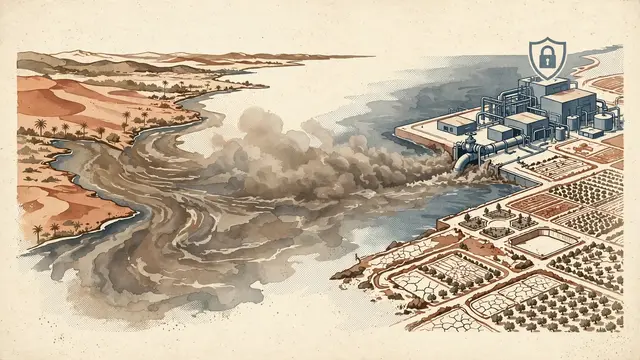
A severe marine pollution event, caused by a massive bloom of micro-algae originating from Egypt's coast, has led to the near-complete shutdown of Israel's desalination facilities on Tuesday. The bloom caused a sharp increase in seawater turbidity, forcing most desalination plants along the Mediterranean coast to cease operations. Currently, only the Hadera desalination plant remains operational.
The disruptions began at the southernmost plant in Ashkelon and spread northward, affecting plants in Ashdod, Sorek A, Sorek B, and Palmahim. This has resulted in water supply disruptions and reduced water pressure in various parts of the country, with the municipalities of Be'er Sheva and Ashkelon reporting issues.
In response to the emergency, local authorities have significantly curtailed public gardening and municipal water usage. The agricultural sector is experiencing the most severe impact, with farmers nationwide receiving notices of reduced water quotas or complete supply suspensions for the first time in years, a move expected to cause substantial crop damage.
The Water Authority stated its primary focus is ensuring household water supply and that localized problems will be addressed promptly. Energy and Infrastructure Minister Eli Cohen described the event as an unprecedented natural phenomenon over the past two decades. He noted efforts to increase pumping from aquifers and the Sea of Galilee, and the approval of two additional desalination plants under strict monitoring. "Ensuring water supply to residents is our top priority, and we are exploring solutions to restore water to farmers as soon as possible," Cohen added.
Environmental organization "Adam Teva V'Din" warned that the crisis exposes strategic flaws in water resource management. Experts from the organization criticized the heavy reliance on desalination as a "dangerous and flawed" policy that overlooks threats like marine pollution. They emphasized that Israel's water resilience is crucial for its security and that dependence on a single source is untenable. The organization also pointed to neglected natural emergency reservoirs and the closure of drinking water wells due to pollution without rehabilitation, while a master plan for aquifer restoration awaits government approval.
Experts suggest this crisis, similar to past shortages in ammunition or medical equipment, highlights the urgent need for a "Plan B" and greater infrastructural independence.
אותו אירוע, כפי שכל מערכת דיווחה עליו בנפרד. פתחו כמה דיווחים כדי להשוות מה כל מערכת מדגישה, ומה היא משאירה בחוץ.
שמאל 1מרכז 5ימין 2חרדית 2אחרים 5