
Israel Faces Water Shortages as Desalination Plants Halt Due to Murky Seas
Most of Israel's private desalination plants have been temporarily shut down due to high seawater turbidity from weather, leading to water conservation measures in Tel Aviv and potential disruptions elsewhere. The National Cyber Directorate confirmed it is not a cyberattack.
הידיעה ב-5 שורות · תקציר של baba
- Desalination plants halted due to murky seawater, not cyberattack.
- Tel Aviv beaches and gardens face water restrictions.
- Water Authority confirms issue, expects plants to resume soon.
- Southern residents most affected by freshwater supply issues.
- Eilat and Hadera plants, plus Mekorot facilities, remain operational.
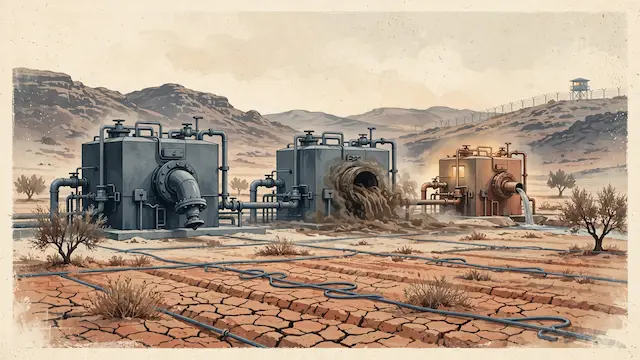
Most of Israel's private desalination plants have been temporarily shut down since Saturday due to severe turbidity in seawater caused by recent weather conditions. The National Cyber Directorate clarified that this is not a cyberattack, but rather a consequence of unusually murky sea conditions, as confirmed by the Water Authority. The shutdown began on Saturday, but the Water Authority only reported the issue on Monday.
In response, the Tel Aviv-Yaffo municipality announced on Monday that it would reduce the use of non-essential water sources, including irrigation in gardens and water in showers and taps at its beaches. The municipality stated its teams are prepared for all scenarios and are working to maintain functional continuity. Givatayim also urged residents to conserve water. Jerusalem's water company, Gihon, warned of potential disruptions to water supply in and around the city and opened points for filling water containers.
The Water Authority instructed local authorities and corporations to halt public gardening. The shutdown has not affected the desalination plants in Eilat and Hadera, nor the 20 local plants operated by Mekorot. Of Israel's six major desalination facilities, five have been affected: Ashkelon, Ashdod, two in Sorek, and one in Palmahim.
According to the Water Authority, the water economy is fully managed, with Mekorot immediately increasing production from available sources. They estimate that some desalination plants will resume operation soon, once the seawater clears. The turbidity, which exceeds a certain threshold, clogs the filtration membranes and halts the process. The CEO of the Water Authority, Hezi Lifshitz, noted that southern residents relying on freshwater are currently suffering the most. He defended the delayed reporting, stating that plant shutdowns due to malfunctions are not uncommon, citing a previous incident at the Ashkelon plant due to pollution from Gaza.
מוזכרים
אותו אירוע, כפי שכל מערכת דיווחה עליו בנפרד. פתחו כמה דיווחים כדי להשוות מה כל מערכת מדגישה, ומה היא משאירה בחוץ.
מרכז 3ימין 2חרדית 2אחרים 2








