
Data Challenges Claims That Israel’s ‘Affordable Basket’ Initiative Lowered Food Prices
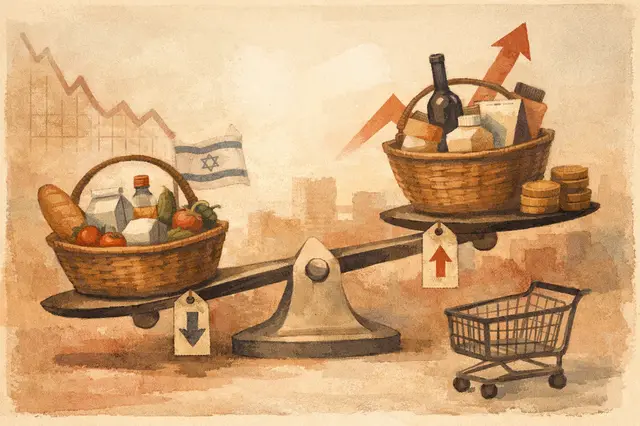
Since the launch of the “Affordable Basket of Israel” initiative by Economy Minister Nir Barkat, the program has faced criticism from various food market players. Last week, Barkat presented data claiming the initiative significantly boosted sales in Carrefour stores and reduced average market prices by 4.75%, with Carrefour’s market share in basket products rising from 2.2% to 7.2% and about 100,000 new customers joining the promotion. Barkat described the initiative as causing a “market earthquake” and emphasized that Israeli consumers are not being exploited.
However, an investigation by Globes, using multiple data sources including CHP and StoreNext, reveals a different reality. CHP’s price index shows Carrefour’s basket products cost 1,080 shekels, while competitors like Yochananof and Rami Levy charge about 33% more, indicating no significant market-wide price drop. StoreNext data shows that about half of the basket products sold significantly less in Q1 2026 compared to Q1 2025, contradicting Barkat’s claims of soaring sales. For example, 500g chickpeas reportedly increased 1,490% in sales according to Barkat’s office, but StoreNext reports an 18% decline in revenue for that product across supermarkets.
A market source explained Carrefour holds only 5% of the total food retail market, so declines in other retailers’ sales could reflect product shifts rather than overall growth. Some products did see increased demand, but many experienced notable drops. A recent study by Tel Aviv University’s Faculty of Management found that while basket product prices at Carrefour dropped by about 35%, prices for many other products in Carrefour stores rose significantly, offsetting consumer savings. The study’s authors criticized the initiative for lacking structural reforms and questioned the justification for costly retailer incentives given the minimal overall price reductions.
Yochananof CEO Eitan Yochananof criticized the price-fixing approach as unfree market behavior, suggesting professional consultation would have been more effective. Carrefour responded that it fully met its commitments and led the market in price reductions, attributing claims of price increases to confusion over expired promotions. The Ministry of Economy maintained that 800,000 Israelis save hundreds of shekels per purchase under the initiative and that popular basket products saw a 4.75% price drop according to CHP data.
The findings highlight ongoing debate over the effectiveness and market impact of government-led price interventions in Israel’s food sector.
The same event, reported separately by each outlet. Open a few to compare what different newsrooms emphasize — and what they leave out.








Not the same event — other stories that share this one’s people, places, or theme: background, reactions, and follow-ups.


Ask About This Article
Duki reads it, and every newsroom on the same story, then answers with sources.