
Study Finds Israel's 'Basket Program' Cuts Prices on Selected Goods but Raises Others
Translated & summarized from Mako by baba
A Tel Aviv University study found that Israel's 'Basket Program' reduced prices of selected products by about 35% at Carrefour stores but led to price increases in many other items, limiting overall consumer savings. The program's impact on competing supermarkets was minimal, with only slight price reductions observed elsewhere.
The story in 6 lines · by baba
- The 'Basket Program' cut prices of 100 selected products by about 35% at Carrefour stores.
- Prices rose in 46 other product categories at Carrefour, offsetting some savings.
- The government funded a 50 million shekel public advertising campaign for the program.
- Competing supermarket chains showed limited price reductions, averaging around 3%.
- Online competitors saw only minor price drops, with some exceptions like Rami Levy online.
- The overall impact on cost of living was modest and possibly counterproductive.
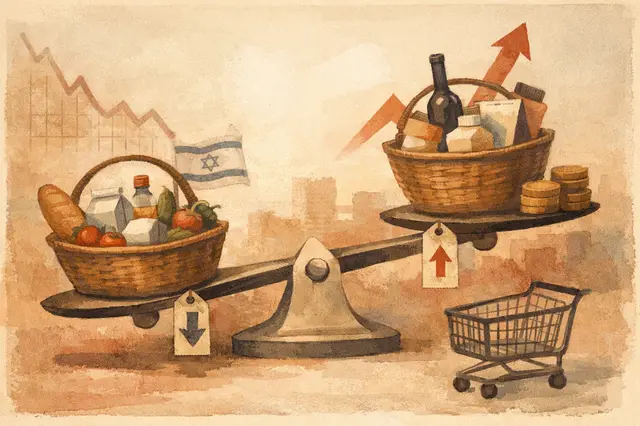
A recent study by Tel Aviv University evaluated the economic impact of Israel's "Basket Program," launched by Economy Minister Nir Barkat, two months after its implementation. The program aimed to reduce the cost of living by offering a fixed basket of 100 products at a total price of 1,098 shekels, down from an average of about 1,700 shekels before the initiative. This basket was sold exclusively at 50 Carrefour stores and online for six months, with the government allocating 50 million shekels from public funds for a promotional campaign.
The research, conducted by Prof. Itay Atar, Adi Omer, and Dr. Or Avishi-Rizhi, analyzed daily price data from over 2,000 stores across approximately 70 supermarket chains. It found that while the prices of the basket products at Carrefour dropped by roughly 35%, prices for dozens of other products in the same stores increased. Specifically, price hikes were observed in 46 out of 76 product categories examined, with statistically significant increases in 23 categories.
Outside Carrefour, the program's influence was limited. Competing supermarket chains showed only minor price reductions for basket products, averaging around 3%, with discount chains like Machsanei Hashuk leading with a 10% decrease. Online, price reductions among competitors averaged just 2.3%, with notable exceptions such as Rami Levy online, which cut prices by 9%. Major online retailers like Shufersal and Machsanei Hashuk did not show significant price drops.
The researchers concluded that although the program successfully lowered prices for the selected basket items, its overall effect on reducing the cost of living was modest and potentially offset by price increases in other products. This dynamic may undermine the intended consumer savings from the initiative.
Mentioned







