
Early Flu Season Causes Dozens of Hospitalizations Across Israel
Translated & summarized from Mako by baba
The story in 5 lines · by baba
- Dozens hospitalized as Israel experiences an unusually early and severe flu season.
- Daily flu admissions are three to four, a sharp increase from previous years.
- Older individuals and those with pre-existing conditions face higher risk of complications.
- Doctors urge immediate flu vaccination to prevent severe illness.
- Severe symptoms like shortness of breath require emergency medical attention.
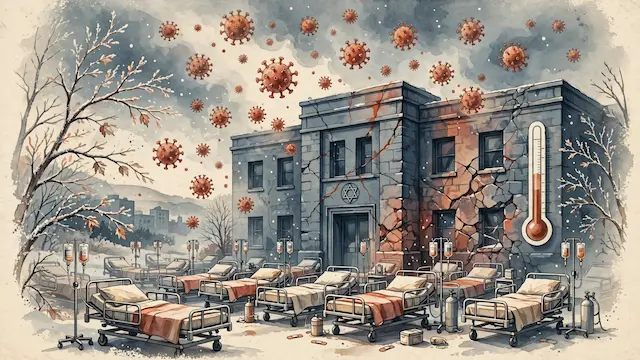
Israel is experiencing an unusually early and severe flu season, with dozens of patients already hospitalized and some requiring intensive care. Doctors report seeing three to four flu patients admitted daily, a significant increase compared to previous years when zero or one admission at this time was typical. The majority of diagnosed cases are Influenza A.
While younger patients generally experience mild to moderate symptoms like fever and cough, older individuals and those with underlying health conditions are at higher risk for severe complications, including pneumonia and hospitalization. One pregnant woman's condition deteriorated, necessitating intensive care. Doctors emphasize that the risk of severe illness increases with age, particularly for those over 65, and individuals with heart or lung conditions, as well as smokers. Complications like pneumonia and shortness of breath are common reasons for admission, and in rare cases, myocarditis can develop even in young people.
Several major hospitals, including the Galilee Medical Center, Sheba Medical Center, and Shaare Zedek Medical Center, have reported a notable rise in flu admissions. At the Emek Medical Center in Afula, doctors are also observing an increase in flu cases, noting that symptoms can be similar to COVID-19, making laboratory testing crucial. At Shaare Zedek, two to four flu patients are hospitalized at any given time, primarily adults presenting with high fever, shortness of breath, and pre-existing conditions.
Health officials are urging the public to get vaccinated against the flu immediately, rather than waiting for the peak of the season. They explain that while vaccination may not always prevent infection, it significantly reduces the likelihood of severe illness and complications. Doctors advise individuals experiencing severe symptoms such as significant shortness of breath, chest pain, confusion, or dehydration to seek emergency medical attention. Those with milder symptoms are encouraged to rest at home to avoid spreading the virus.
Mentioned


