
Brazil Election: Lula Dominates Ramallah Vote, Bolsonaro Leads in Tel Aviv
Translated & summarized from Israel Hayom by baba
The story in 6 lines · by baba
- Brazil held its first round of presidential elections with Lula da Silva and Flávio Bolsonaro as main contenders.
- Overseas voting showed Lula winning in Ramallah and Bolsonaro leading in Tel Aviv.
- A runoff election is likely if no candidate secures over 50% of the vote.
- The election occurs amidst legal challenges for former President Jair Bolsonaro.
- Flávio Bolsonaro is pro-Israel and pledged to move Brazil's embassy to Jerusalem.
- Lula da Silva has faced criticism in Israel for his stance on the Gaza conflict.
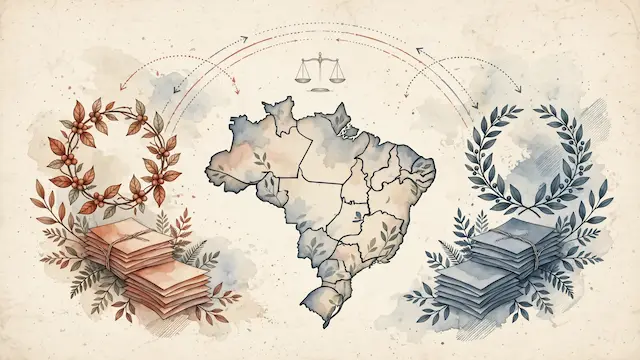
Brazil held its first round of presidential elections on Sunday, with over 158 million eligible voters casting ballots. The race was primarily between incumbent President Luiz Inácio Lula da Silva, seeking a fourth term, and Senator Flávio Bolsonaro, son of former President Jair Bolsonaro. Polls closed at 11:00 PM Israel time, with results expected within hours. Lula expressed confidence in winning in the first round, framing the choice as between "strengthening the democratic regime and barbarism." Bolsonaro focused his campaign on change and fighting crime, stating, "Brazil cannot bear more suffering, such high taxes, so many murdered women. I want to free the Brazilian people."
The final poll from Datafolha, released Saturday, showed Lula with 45% of valid votes and Flávio Bolsonaro with 42%. A candidate needs over 50% to win outright in the first round; otherwise, the top two contenders will face a runoff on October 25. The runoff race is projected to be very close, with Lula leading 47% to 46% in Datafolha, while another poll by Quaest showed Flávio Bolsonaro ahead 44% to 42%.
The election took place against the backdrop of former President Jair Bolsonaro's coup trial. After narrowly losing to Lula in 2022, his supporters stormed government buildings. Jair Bolsonaro was convicted of conspiracy to overthrow the government and sentenced to 27 years in prison. Flávio Bolsonaro, presenting himself as a "milder Bolsonaro" but calling his father his "compass," pledged to pardon his father if elected and appoint five Supreme Court justices. The trial led to a sharp confrontation with then-US President Donald Trump, who called the trial a "witch hunt" and imposed tariffs and sanctions. The dispute reignited in July when Washington imposed a 25% tariff on Brazilian goods, citing unfair trade practices. Lula claimed this was an attempt to influence the election and made Brazilian sovereignty a campaign cornerstone.
The "Banco Master" affair also loomed over the campaign, involving banker Daniel Varkaru, arrested on suspicion of massive fraud. Investigations are examining his ties to senior figures, including Judge Alexander de Moraes, who presided over Jair Bolsonaro's case, and Flávio Bolsonaro himself, who is under investigation for money laundering. Both deny wrongdoing. Lula also faced scrutiny over a police investigation into his son for influence peddling.
Israel closely monitored the elections. Lula, who compared the war in Gaza to the Holocaust in 2024 and joined South Africa's case against Israel at the International Court of Justice, has been declared persona non grata in Israel. His government has accused the Netanyahu government of "genocide of women and children in Gaza." Flávio Bolsonaro, in contrast, is strongly pro-Israel, like his father, and pledged to strengthen ties with the US and Israel. Israeli flags are common at Bolsonaro campaign rallies, with support bolstered by the evangelical community. Flávio Bolsonaro promised to move Brazil's embassy to Jerusalem as one of his first acts.
Initial results from overseas polling stations reflected this divide. In Ramallah, Lula secured 1,078 votes (over 93%) compared to 46 for Flávio Bolsonaro. In Israel, the picture was reversed, with Flávio Bolsonaro receiving 523 votes (over 74%) and Lula just 92, according to results from Tel Aviv. Brazilians also elected all 513 members of the Chamber of Deputies, two-thirds of the Senate, and state governors. If the polls are accurate, the decision will be postponed by three weeks, determining whether Latin America's largest economy joins a right-wing "blue wave" or remains a "red stronghold" that continues to antagonize the White House.
Mentioned
The same event, reported separately by each outlet. Open a few to compare what different newsrooms emphasize — and what they leave out.
Centre 4Right 1Other 1







Not the same event — other stories that share this one’s people, places, or theme: background, reactions, and follow-ups.