
Brazil Presidential Election: Tight Race Between Lula and Bolsonaro's Son
Translated & summarized from Israel Hayom by baba
The story in 5 lines · by baba
- Brazil's presidential election is a close race between Lula and Flávio Bolsonaro.
- A second round of voting is expected on October 25th.
- The election is a key test for the regional right-wing "blue wave."
- Lula is persona non grata in Israel; Flávio Bolsonaro is pro-Israel.
- The "Banco Master" affair and US relations are campaign issues.
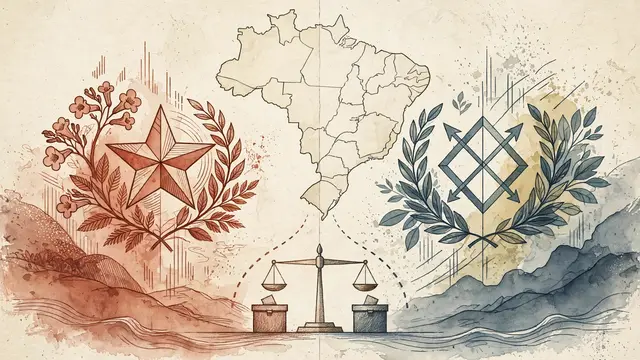
Brazil is heading to the polls for its presidential election, with a close contest expected between incumbent President Luiz Inácio Lula da Silva and Flávio Bolsonaro, son of former President Jair Bolsonaro. More than 158 million Brazilians are eligible to vote in the first round. A Datafolha poll released Thursday shows Lula leading with 42% against Bolsonaro's 38%. As neither candidate is projected to secure over 50% of the vote, a second round is anticipated on October 25th, where polls indicate an even tighter race: 48% for Lula versus 45% for Bolsonaro, within the margin of error.
The election is seen as a significant test for the right-wing "blue wave" that has swept across several Latin American countries. In Israel, there is hope for a change in leadership. Lula has been declared persona non grata in Israel, while Flávio Bolsonaro, a strong supporter of Israel like his father, has pledged to move Brazil's embassy to Jerusalem.
Both candidates concluded their campaigns with rallies. Lula led a large march in Rio de Janeiro, warning about the defense of democracy, while Flávio Bolsonaro planned a motorcycle rally in São Paulo state. The campaign was marked by a lack of televised debates between the two main contenders, who both withdrew from scheduled events. The election has also been overshadowed by controversies, including rumors about Flávio Bolsonaro's religious intentions and criticism of Lula regarding medical examinations.
A central issue in the election is the "Banco Master" affair, involving Supreme Court Justice Alexandre de Moraes, who presided over the trial that led to Jair Bolsonaro's imprisonment. De Moraes, considered a rival of the Bolsonaro family, has faced scrutiny over his connections with banker Daniel Varkaru, who was arrested on suspicion of fraud. Reports suggest Varkaru's bank had a contract with the judge's wife's law firm, and messages were exchanged between Varkaru and an individual listed as the judge in Varkaru's phone, though the report does not conclude Moraes committed an offense.
The relationship with former US President Donald Trump has also been a recurring theme. Trump's past criticisms of Bolsonaro's trial and trade sanctions against Brazil have influenced the campaign dynamics. Lula has emphasized Brazilian sovereignty, while Trump has stated he is closely monitoring the election without endorsing a candidate.
Lula, 80, is seeking an unprecedented fourth term, highlighting his past welfare programs and efforts to reduce poverty, deforestation, and inflation, though he faces criticism over the cost of living and crime. Flávio Bolsonaro, 45, presents himself as a more moderate version of his father, vowing to pardon him and appointing conservative judges. He positions crime reduction as a key campaign focus, citing El Salvador's President Nayib Bukele as a role model.
The Israeli angle is particularly stark. Lula's past remarks comparing the Gaza conflict to the Holocaust and his government's support for South Africa's case against Israel at the International Court of Justice have led to his persona non grata status in Israel. Conversely, Flávio Bolsonaro continues his father's pro-Israel stance, with Israeli flags frequently seen at his rallies, supported by Brazil's influential evangelical community.
Read the original at Israel HayomMentioned


