
Flydubai Pilot May Have Shut Down Engines During Attack
Translated & summarized from Vesty by baba
The story in 5 lines · by baba
- Flydubai co-pilot may have shut down engines during attack, investigation suggests.
- Emergency lighting activation points to loss of main power, possibly from engine shutdown.
- Co-pilot's initial plan was an attack on a building in Israel.
- Israeli passengers intervened to stop the co-pilot from crashing the plane.
- The aircraft was diverted to Tabuk, Saudi Arabia, for an emergency landing.
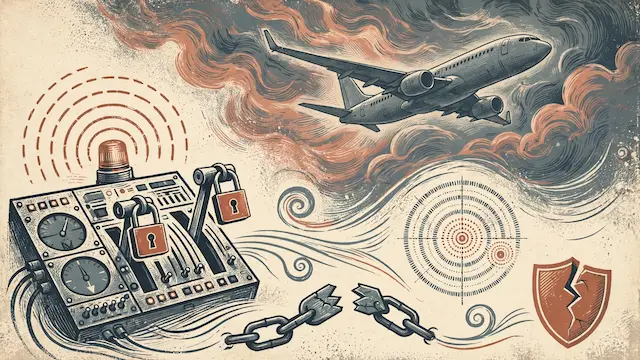
A new version of the Flydubai incident suggests the co-pilot who attacked the captain may have shut down the aircraft's engines mid-flight. This conclusion was reached by two Boeing 737 captains who reviewed flight recordings for an investigation by the Italian newspaper Corriere della Sera, as reported by Ynet. The theory is supported by the sudden activation of emergency lighting in the cabin, which could indicate a loss of main power, potentially caused by engine shutdown. The "flight of horror" on September 30 began when co-pilot Hamam al-Hamami attacked Captain Smith Machchar with an emergency axe. Despite severe injuries, Machchar managed to unlock the cockpit door, allowing Israeli passengers to subdue al-Hamami and stabilize the aircraft. The Italian investigation posits that al-Hamami, realizing his initial plan was failing, decided to crash the plane in Saudi Arabia. He reportedly disengaged the autopilot and pushed the controls forward, causing the plane to rapidly lose altitude. Earlier, journalist Smadar Peri reported that al-Hamami's original plan was believed to be a 9/11-style attack on a high-rise building in Israel, possibly the Azrieli towers in Tel Aviv. Investigators now suggest that when this plan became impossible, al-Hamami cut fuel to the engines. The emergency lighting, which activates on battery power when main power is lost, is a key piece of evidence for the engine shutdown theory. Investigators will examine if al-Hamami switched the fuel controls from 'Run' to 'Cutoff.' The flight crew that later took control likely had to restart the engines. The investigation is based on passenger testimonies, security data, and accounts from airport and air traffic control personnel. The aircraft transmitted distress codes, initially 7700 for a general emergency, then 7500 indicating a suspected hijacking, as it approached Jordanian airspace. Air traffic controllers diverted the plane to Tabuk, Saudi Arabia, for an emergency landing.
The investigation details the events of September 30, starting with passengers boarding the full flight from Dubai to Tel Aviv. The crew, including Captain Machchar and Co-pilot al-Hamami, conducted their pre-flight checks. The flight departed Dubai at 7:04 AM and reached cruising altitude. Around 9:15 AM, al-Hamami attacked Machchar from behind with an emergency axe. Machchar, despite severe injuries, fought back and managed to partially unlock the cockpit door. Around 9:20 AM, Israeli passengers, alerted by a commotion, rushed to the cockpit. Al-Hamami then disengaged the autopilot and attempted to crash the plane, causing a rapid descent. However, Machchar succeeded in unlocking the door, and Israeli passengers, including Yaniv Hayon, intervened, pulling back on the controls. Two relief pilots eventually restored normal flight. The passengers secured al-Hamami, and the aircraft was diverted to Tabuk, landing safely at 10:57 AM.
Mentioned
The same event, reported separately by each outlet. Open a few to compare what different newsrooms emphasize — and what they leave out.








Not the same event — other stories that share this one’s people, places, or theme: background, reactions, and follow-ups.



