
Yosef Haguel, Inspiration for Iconic Israeli Song, Dies at 80
Translated & summarized from Kan News by baba
The story in 6 lines · by baba
- Yosef Haguel, inspiration for "Ballad for a Medic," died at 80.
- He was wounded in the Six-Day War and saved by a medic.
- The medic, Shlomo Epstein, died shielding Haguel and received a Medal of Valor.
- Haguel named his son Shlomo after the fallen medic.
- The song "Ballad for a Medic" became a hit but was initially suppressed.
- Yehoram Gaon's performance of the song won the 1969 Song Festival.
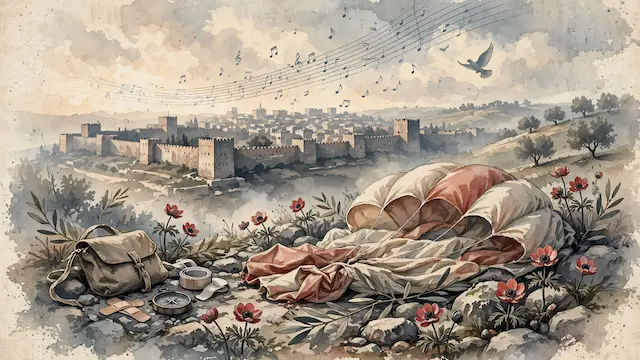
Yosef Haguel, the soldier whose wartime experience inspired the beloved Israeli song "Ballad for a Medic," passed away at his home on Saturday at the age of 80. Haguel was serving in the reserves with the Paratroopers' 55th Brigade at the time of his death.
During the Six-Day War in 1967, Haguel fought with the Paratroopers' 28th Battalion in East Jerusalem against the Jordanian Legion. He was severely wounded in battle, and the company medic, Shlomo Epstein, treated him under fire. When mortar shells rained down, Epstein shielded Haguel with his own body, saving his life but perishing from a direct hit. Epstein was posthumously awarded the Medal of Valor for his heroism.
In honor of the medic who saved him, Haguel later named his eldest son Shlomo. The song "Ballad for a Medic," with lyrics by Dan Almogor and music by Efi Netzer, was famously performed by Yehoram Gaon at the 1969 Song Festival, where it won first place.
According to Netzer, the song was written 11 years before the Six-Day War, when Almogor was 21, and was not based on a specific event, though it bore similarities to real occurrences. Following the war, bereaved families found the song difficult to hear and requested it not be played on the radio. Epstein's parents also approached Netzer with a similar plea. Consequently, the song was largely absent from radio airwaves, except for Memorial Day for fallen soldiers.
Over time, "Ballad for a Medic" became one of Yehoram Gaon's most cherished songs, topping his favorite song charts in 1999 and 2010 on Galgalatz and in 2004 on Galei Tzahal.
Read the original at Kan NewsMentioned
The same event, reported separately by each outlet. Open a few to compare what different newsrooms emphasize — and what they leave out.









