
IDF Division 162 Crushes Hamas in Northern Gaza After Complex Operation
Translated & summarized from Hamal by baba
The story in 6 lines · by baba
- IDF Division 162 dismantled Hamas battalions in northern Gaza.
- A new strategy involved encircling civilians before ground assault.
- Hundreds of Hamas operatives were captured, yielding vital intelligence.
- The operation faced intense resistance and resulted in heavy Israeli losses.
- The Kamal Adwan hospital was encircled, leading to many Hamas arrests.
- The operation inflicted significant damage on Hamas's northern Gaza command.
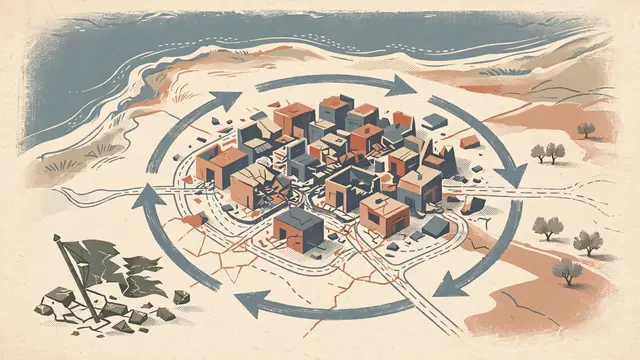
In October 2024, intelligence from the Shin Bet and Aman indicated a concentration of senior Hamas operatives and commanders in northern Gaza preparing for conflict with the IDF. The General Staff authorized a major ground maneuver in the area, led by Division 162 under Brigadier General Itzik Cohen, to dismantle Hamas's local infrastructure. The division, having recently completed operations in Rafah, moved north with the objective of destroying Hamas battalions in the region, described by intelligence as a 'tough nut to crack.'
Brigadier General Cohen emphasized deception and ruse, as intelligence warned of Hamas's readiness. Colonel Ahsan Deksa, commander of Brigade 401, proposed a sophisticated maneuver involving encircling northern Gaza's main arteries from the west, south, and east, before advancing into the densely populated Jabalia. This strategy required a shift from previous operations, where civilian populations were evacuated first. Instead, the IDF first established encirclement and controlled exit points, or 'drains,' for civilians before commencing the ground assault.
Approximately 100,000 civilians exited the area, far exceeding initial estimates of 30,000-40,000. At the exit points, Shin Bet and Unit 504 personnel meticulously screened individuals, separating civilians from combatants. This process led to the detention of hundreds of Hamas operatives, yielding significant intelligence on hostages, enemy locations, and infrastructure. Major G, a battalion deputy commander, noted that many civilians were initially prevented from leaving shelters by Hamas, who used them as human shields.
The operation, while yielding substantial intelligence and capturing nearly 1,300 Hamas operatives, came at a heavy cost. Colonel Deksa was killed in action in Jabalia, and the commander of Battalion 52 was severely wounded. The division commander, Cohen, appointed Colonel Meir Biderman, Deksa's close friend and his own deputy, to lead Brigade 401, emphasizing the continuation of the mission despite the loss.
As the IDF advanced deeper into Jabalia, described as the 'Casbah,' they encountered intense resistance, including booby-trapped buildings and ambushes, reflecting Hamas's ten-month preparation. A critical phase involved the encirclement of the Kamal Adwan hospital, believed to house around 50 Hamas operatives. After issuing calls for surrender, approximately 350 individuals identified as Hamas operatives emerged from the hospital among a larger group of civilians and were apprehended or neutralized.
The operation concluded with the dismantling of Hamas's northern Gaza command structure, though not without significant casualties. The IDF located a strategic underground system they had been searching for since the war's outset. The intense fighting in Jabalia, characterized by close-quarters combat and the exploitation of tunnels, resulted in the deaths of many of Israel's finest soldiers and commanders, underscoring the heavy price of the operation's success.
Read the original at HamalMentioned


