Netanyahu's Campaign Leverages Fear and Familiarity, Researcher Says
Translated & summarized from Cursorinfo by baba
The story in 5 lines · by baba
- Netanyahu's campaign uses fear and repetition, not just corruption claims, to sway voters.
- Opposition messaging primarily reaches those already opposed to Netanyahu.
- Voter fears about security and military service burden are key election drivers.
- Netanyahu frames opponents as a security threat, leveraging the "illusory truth effect."
- Past campaigns show success with similar psychological tactics.
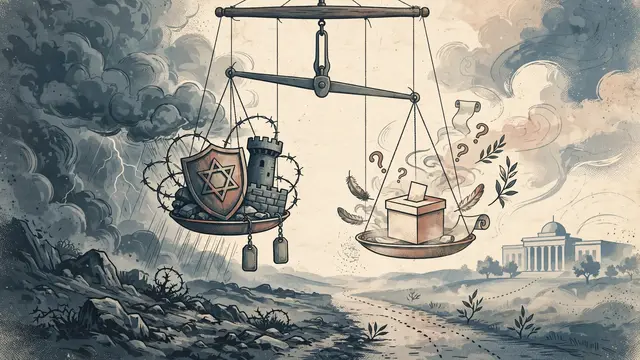
A behavioral researcher argues that Prime Minister Benjamin Netanyahu's campaign strategy is effectively leveraging voter fears and employing a tactic of repeated messaging, reminiscent of his 1996 campaign. Dr. Liraz Margalit, a researcher at Reichman University, suggests that opposition efforts to highlight Netanyahu's alleged corruption and unsuitability for office are largely reaching those already opposed to him, failing to sway undecided voters.
Margalit explains this phenomenon through psychological concepts like "echo chambers," where information circulates within like-minded groups, and "motivated reasoning," where individuals interpret new information through their existing political identities. This leads opponents to see further proof of corruption and supporters to view it as persecution. Undecided voters, she posits, often conclude that all politicians are corrupt and focus on who can best protect them.
Netanyahu's past strategies, including the 1996 campaign where his team, with consultant Arthur Finkelstein, focused on a simple, repeated slogan "Peres will divide Jerusalem" to define his rival, are cited as examples. Margalit also points to the 2015 election, where a last-minute video about Arab voter turnout was released. This tactic, she notes, relies on the "illusory truth effect," where repeated exposure makes a statement seem more credible, regardless of its initial reception.
Currently, Netanyahu is framing his political opponents, including former IDF Chief of Staff Gadi Eisenkot, as a "left-wing government" that would include Arab parties. This narrative, Margalit suggests, taps into two primary fears of undecided voters: security concerns related to potential government reliance on Arab parties, and the perceived inequality in military service burdens, particularly concerning the ultra-Orthodox community.
Margalit concludes that while anger can mobilize a base, fear is more effective in influencing undecided voters. Netanyahu's strategy, she believes, aims to make people fear the unknown, particularly regarding security, while his opponents continue to focus on his alleged corruption, a message that resonates more within their existing political camps. The election outcome, she predicts, will hinge on which fear ultimately proves stronger for the undecided voter.
Read the original at CursorinfoMentioned
The same event, reported separately by each outlet. Open a few to compare what different newsrooms emphasize — and what they leave out.

Not the same event — other stories that share this one’s people, places, or theme: background, reactions, and follow-ups.