
Netanyahu Employs 1996 Tactic Against Eisenkot, Analyst Claims
Translated & summarized from Maariv by baba
The story in 6 lines · by baba
- Netanyahu is accused of using a 1996 strategy to define opponents before they define themselves.
- The strategy aims to instill fear in undecided voters regarding security and military service.
- The opposition's focus on scandals primarily convinces already opposed voters, analyst claims.
- Netanyahu's message frames Gadi Eisenkot as leading a left-wing government reliant on Arab parties.
- Public fears of security and equitable burden-sharing are key elements of the political battle.
- The perception of Eisenkot's bloc as 'left-wing' is seen as a significant consciousness-shaping success.
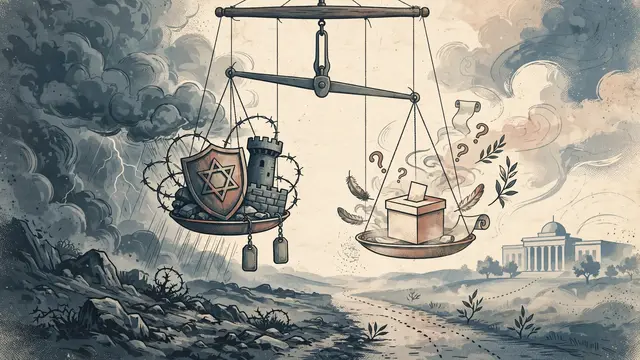
Prime Minister Benjamin Netanyahu is employing a political strategy similar to one used in 1996 against Shimon Peres, according to analyst Liraz Margalit. This tactic involves identifying a small, movable segment of voters and defining the opponent before they can define themselves, then repeating a single message until it becomes accepted as fact. In 1996, this strategy focused on the message "Peres will divide Jerusalem," contributing to Netanyahu's narrow victory.
Margalit argues that the current opposition to Netanyahu is inefficient, focusing on various scandals that primarily resonate with those already opposed to him. This approach fails to sway undecided voters, who may conclude that all politicians are corrupt and simply choose the one who offers them security. Netanyahu, conversely, is effectively targeting undecided voters by framing his opponents, particularly former IDF chief of staff Gadi Eisenkot.
Netanyahu's current strategy, as described by Margalit, centers on portraying Eisenkot as leading a "left-wing government" that would rely on Arab parties. This message, repeated consistently, aims to instill fear in undecided voters who are concerned about national security and the burden of military service. Margalit's research indicates that the public's primary fears are security and equality in bearing the burden, and Netanyahu is leveraging the security fear, while the burden issue works against him due to his coalition's reliance on ultra-Orthodox parties.
Margalit notes that the perception of Eisenkot and his potential allies as "left-wing" is itself a significant achievement in shaping public consciousness. She points to Netanyahu's recent statement that "Gadi Eisenkot will establish a left-wing government with Avigdor Lieberman, Yair Golan, Naftali Bennett, and the Arab parties. Only a strong Likud will stop them." This narrative aims to exploit the fear of an unknown quantity in Eisenkot's leadership and the potential inclusion of Arab parties in government, a fear amplified by polls suggesting Eisenkot's bloc would need Arab support to form a majority.
Margalit also highlights that anger, a potent political tool, can be channeled effectively. While anger can drive voters to the polls to prevent an opposing candidate from winning, fear drives people to seek the familiar. Netanyahu needs voters to fear the unknown, and his strategy taps into the public's anxieties about security and the equitable distribution of national responsibilities, particularly military service.
Read the original at MaarivMentioned
The same event, reported separately by each outlet. Open a few to compare what different newsrooms emphasize — and what they leave out.

Not the same event — other stories that share this one’s people, places, or theme: background, reactions, and follow-ups.


