History of Deliberate Plane Crashes and Evolving Aviation Security
Translated & summarized from Mako by baba
The story in 4 lines · by baba
- Deliberate plane crashes and hijackings have reshaped aviation security.
- The Germanwings crash led to rules against single pilots in locked cockpits.
- 9/11 attacks spurred significant changes in airport and flight security.
- El Al employs enhanced security measures like double cockpit doors.
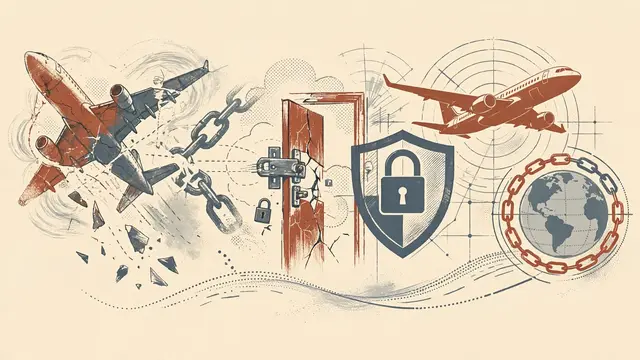
The recent security incident on a Flydubai flight has brought to mind historical instances of deliberate aircraft destruction and hijacking, which have significantly shaped modern aviation security protocols. These events, ranging from terrorist attacks to pilot suicides, underscore the ongoing struggle for control within the cockpit.
The most prominent collective memory is the September 11th attacks, where terrorists hijacked three planes, crashing two into the World Trade Center and one into the Pentagon. On United Airlines Flight 93, passengers heroically attempted to thwart the hijackers' mission, famously rallying with the cry "Let's roll," though the plane ultimately crashed.
Other incidents highlight threats originating from within the cockpit. In 2015, Germanwings Flight 9525 crashed in the Alps after the co-pilot, suffering from severe depression, locked the cockpit door while the pilot was out and deliberately crashed the plane. A similar event occurred in 1999 with EgyptAir Flight 990, which Egyptian authorities attributed to a technical failure, but is widely considered a suicide by the captain.
Following the Germanwings disaster, new global procedures were implemented, prohibiting a single pilot from being alone and locked in the cockpit. When a pilot leaves, a flight attendant must enter, or the door must remain open and secured. Additional security measures, such as those implemented after Richard Reid's failed shoe-bomb attempt, have also become standard.
Unexplained disappearances, like Malaysia Airlines Flight 370, remain a mystery. However, incidents involving bombs on board, such as the Lockerbie bombing of Pan Am Flight 103, have become rarer due to advanced screening technologies at airports. Israeli airline El Al employs heightened security measures, including double cockpit doors and rigorous crew screening, to prevent such incidents.
Read the original at MakoMentioned
The same event, reported separately by each outlet. Open a few to compare what different newsrooms emphasize — and what they leave out.

Not the same event — other stories that share this one’s people, places, or theme: background, reactions, and follow-ups.