
How Terror Attacks Reshaped Air Travel Security
Translated & summarized from Makor Rishon by baba
The story in 5 lines · by baba
- A Flydubai flight to Tel Aviv thwarted a co-pilot's hijacking and suicide attempt.
- Passenger intervention and captain's bravery prevented a potential catastrophe.
- Air travel security has evolved significantly due to past terrorist attacks.
- Israel's aviation security has historically been proactive and influential globally.
- Past incidents like 9/11 and the Germanwings crash reshaped security protocols.
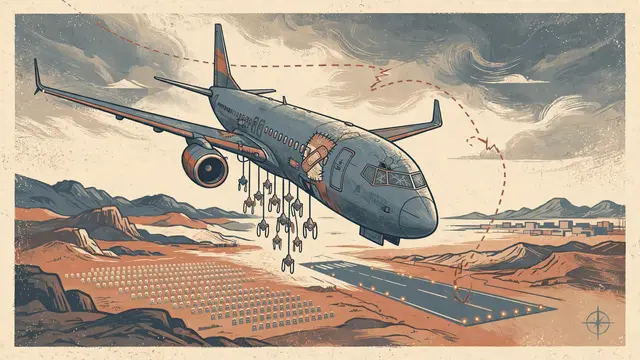
The evolution of aviation security, from minimal checks in the late 1960s to today's sophisticated systems, has been a direct response to changing threats and terrorist attacks. Initially, hijackings were often politically motivated, with passengers seeking asylum or political leverage, as exemplified by a humorous anecdote of a hijacker demanding to be taken to Miami, only to be told they were already flying there. However, the nature of these attacks shifted dramatically over time.
The late 1960s and early 1970s saw a surge in aircraft hijackings, primarily to Cuba. This led the U.S. Federal Aviation Administration (FAA) to mandate metal detectors and X-ray scanners for all passengers and carry-on luggage in 1973. A significant turning point occurred in 1988 when a bomb destroyed Pan Am Flight 103 over Lockerbie, Scotland, highlighting the threat of aircraft destruction rather than just hijacking. This incident led to the "passenger-baggage match" rule, ensuring a passenger is on board if their luggage is.
The most profound changes followed the September 11, 2001 attacks, which transformed aircraft into potential weapons of mass destruction. The U.S. responded with the Aviation and Transportation Security Act, creating the Transportation Security Administration (TSA) and mandating reinforced cockpit doors. Subsequent incidents, like Richard Reid's 2001 shoe-bomb attempt, led to mandatory shoe removal and screening. The 2006 plot to bomb multiple airliners using liquid explosives resulted in strict regulations on liquids and gels in carry-on baggage. In 2009, a foiled bombing attempt using explosives hidden in underwear prompted the integration of body scanners capable of detecting non-metallic threats.
Israel's aviation security, shaped by its geopolitical situation, has often been ahead of global trends. El Al developed a proactive, multi-layered defense strategy decades before Western airlines. A key event was the 1968 hijacking of El Al Flight 426, which prompted the airline to deploy armed undercover sky marshals on all flights, a practice widely adopted by others much later. El Al also pioneered reinforced cockpit doors in the early 1970s, predating the post-9/11 security mandates. The Israeli approach emphasizes human screening and passenger profiling to detect malicious intent, famously demonstrated in the 1986 Nizar Hindawi affair where an El Al security officer's suspicion during an interview uncovered a bomb hidden in a passenger's luggage.
Most recently, the foiled hijacking and suicide attack on a Flydubai flight from Dubai to Tel Aviv on Wednesday underscored the ongoing need for vigilance. The intervention of passengers and the bravery of the Indian captain, Smith Macher, who fought the hijacker and managed to open the cockpit door, prevented a potential catastrophe. This incident echoes the tragic 2015 Germanwings crash, where a co-pilot intentionally crashed the plane into the French Alps after locking the cockpit door, killing all 150 people on board.
Read the original at Makor RishonMentioned
The same event, reported separately by each outlet. Open a few to compare what different newsrooms emphasize — and what they leave out.




Not the same event — other stories that share this one’s people, places, or theme: background, reactions, and follow-ups.



