
Iran Targets Israel as World's Most Dangerous Cyberattack Destination
Translated & summarized from Israel Hayom by baba
The story in 6 lines · by baba
- Israel is the top target for Iranian cyberattacks, receiving 39% of their global activity.
- Israel ranks second globally for cyberattack volume and first in the Middle East/Africa.
- Iranian groups combine cyberattacks with influence operations and electronic warfare.
- Ransomware attacks against Israel increased by 21% year-over-year.
- AI is significantly accelerating cyberattack capabilities for threat actors.
- Digital identity is the main vulnerability, with password spraying being a common entry method.
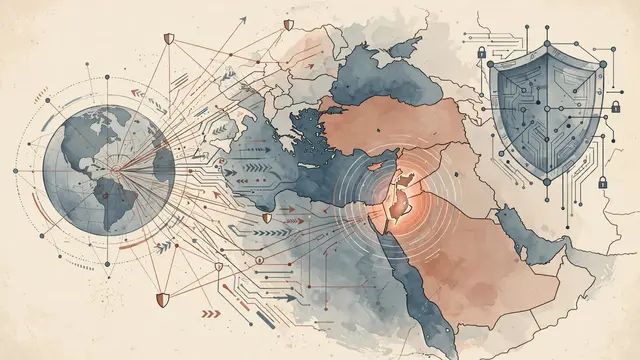
Israel is the primary target for Iranian cyber operations, accounting for 39% of all measured Iranian threat actor activity, according to a new digital defense report. The United States is a distant second with 23%, and the UAE third with 9%. This alarming trend places Israel second globally in terms of cyberattack volume and first in the Middle East and Africa.
Iranian threat groups are escalating their tactics, combining cyberattacks with influence operations and electronic warfare. Key sectors targeted include academia and research (28%), information technology (12%), transportation (11%), and government bodies and research institutions (8%). The report also noted a 21% surge in ransomware incidents against Israel compared to the previous year, which Microsoft views as a tool for hybrid warfare aimed at disrupting the Israeli economy.
The report highlights the increasing use of generative AI by cybercriminals and state-sponsored actors to accelerate attacks, identify vulnerabilities, and exploit systems at unprecedented scales. While defenders also leverage AI, the real-time competition is intensifying.
Digital identity remains the most critical vulnerability, with over 99% of initial cloud environment intrusion attempts relying on simple password spraying. Traditional firewalls and malware protection are insufficient, necessitating a "Zero Trust" model, robust multi-factor authentication, and continuous behavior monitoring.
The findings serve as a wake-up call for Israel's economy, public sector, and high-tech industry. Effective cyber defense now requires ongoing identity protection, strong authentication, anomaly monitoring, and rapid response to threats. The report also stresses that cyber incidents can cascade through supply chains, emphasizing the need for digital resilience and swift recovery from disruptions.
Read the original at Israel HayomThe same event, reported separately by each outlet. Open a few to compare what different newsrooms emphasize — and what they leave out.








Not the same event — other stories that share this one’s people, places, or theme: background, reactions, and follow-ups.
