Supreme Court Decision on Candidate Disqualification Questioned
Translated & summarized from Panet by baba
The story in 5 lines · by baba
- Supreme Court decision on candidate Sami Abu Shehadeh questioned.
- Author claims deliberations were compromised before conclusion.
- Case raises concerns about public's right to choose representatives.
- Political climate may be influencing judicial decisions.
- Need for clear, consistent legal standards for all candidates.
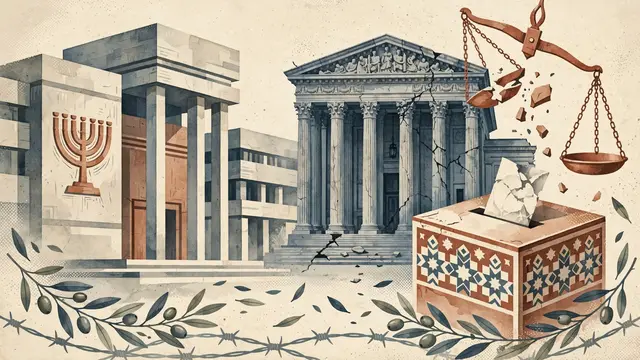
The author, Nayef Kheir, criticizes the Israeli Supreme Court's handling of the disqualification case of Arab candidate Sami Abu Shehadeh, arguing it undermines the integrity of judicial deliberations and the public's right to choose their representatives. The Central Elections Committee had initially disqualified Abu Shehadeh, citing his alleged support for armed struggle based on an October 2023 article. His lawyers contested this, arguing the evidence was insufficient. The government's legal advisor and attorney general supported the disqualification, interpreting the article as endorsing armed struggle.
Kheir highlights a critical moment during the Supreme Court deliberations when the court president announced a majority decision to disqualify Abu Shehadeh before the proceedings concluded. This, the author contends, negates the purpose of deliberations, suggesting the outcome was predetermined. He emphasizes that judicial processes should appear open to evidence and arguments until the very end, fostering public trust in the judiciary.
The case is presented not just as an individual's eligibility but as a broader issue concerning the Arab public's right to elect their representatives freely. Kheir questions whether the court is genuinely evaluating the evidence or if the prevailing political climate, marked by calls to exclude Arab candidates, is influencing the judicial process. He stresses the need for a clear, consistent legal standard applied equally to all candidates.
Ultimately, Kheir argues that the significance of the case lies in the precedent it sets. He fears it could predetermine who is allowed on the ballot, eroding voter choice. The author concludes that justice is not only about the final verdict but also the perceived fairness of the process, urging the judiciary to maintain the appearance of thorough deliberation to preserve public confidence.
Read the original at PanetThe same event, reported separately by each outlet. Open a few to compare what different newsrooms emphasize — and what they leave out.


Not the same event — other stories that share this one’s people, places, or theme: background, reactions, and follow-ups.