
Sign in to baba News

The Desk, the news read to you every hour, is part of News Plus.

or use an email code

Keep the whole picture

News Plus opens the cross-newsroom layer — who covered a story, who didn’t, and how each one worded it.

  • Unlimited follows
  • Alerts for what you follow (in the app)
  • Story alerts (in the app)
  • Hide read stories
  • The daily brief by email
  • Headlines side by side
  • Who reported first
  • The whole archive
  • Your reading diet
  • Duki without the daily limit
  • The Desk: the news, spoken every hour
  • Catch Me Up, and what changed since you read it
  • The Live Terminal

Eligible new subscribers get 7 days free, then $34.99 each year. Renews automatically until cancelled. Cancel any time in your account. Subscription terms.

Your subscription also unlocks the app.

Sign in to baba News

One account across the web, iPhone and Android — your subscription follows it.

or use an email code

Welcome — one more step

News Plus opens the cross-newsroom layer — who covered a story, who didn’t, and how each one worded it.

  • Unlimited follows
  • Alerts for what you follow (in the app)
  • Story alerts (in the app)
  • Hide read stories
  • The daily brief by email
  • Headlines side by side
  • Who reported first
  • The whole archive
  • Your reading diet
  • Duki without the daily limit
  • The Desk: the news, spoken every hour
  • Catch Me Up, and what changed since you read it
  • The Live Terminal

Eligible new subscribers get 7 days free, then $34.99 each year. Renews automatically until cancelled. Cancel any time in your account. Subscription terms.

Your subscription also unlocks the app.

Search stories

Type at least two characters. Results come from every newsroom baba reads.

↑↓ to move · ↵ to open · esc to close

Sign in to baba News

Sign in to keep asking. News Plus removes the daily limit.

or use an email code

Keep the whole picture

News Plus opens the cross-newsroom layer — who covered a story, who didn’t, and how each one worded it.

  • Unlimited follows
  • Alerts for what you follow (in the app)
  • Story alerts (in the app)
  • Hide read stories
  • The daily brief by email
  • Headlines side by side
  • Who reported first
  • The whole archive
  • Your reading diet
  • Duki without the daily limit
  • The Desk: the news, spoken every hour
  • Catch Me Up, and what changed since you read it
  • The Live Terminal

Eligible new subscribers get 7 days free, then $34.99 each year. Renews automatically until cancelled. Cancel any time in your account. Subscription terms.

Your subscription also unlocks the app.

Israeli Officials Simulate Election Day Threats, Including AI and Foreign Interference
By עמיר קורץUpdated 3 hours agoOngoing story · 5 updates
Translated & summarized from Calcalist by baba
Israeli Officials Simulate Election Day Threats, Including AI and Foreign Interference
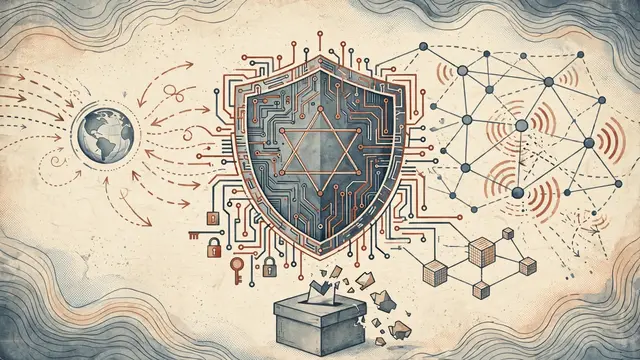
Editorial illustration generated by baba News — not a photograph of the event.
The story · English

Dozens of senior figures from Israel's security, technology, legal, regulatory, media, academic, and civil society sectors recently participated in an intensive simulation exercise to prepare for potential threats during upcoming Knesset elections. The simulation, held at the Institute for National Security Studies (INSS), focused on scenarios involving undue foreign and domestic influence, misinformation campaigns before and on election day, and the possibility of a party refusing to accept the results.

Organizers aimed to identify risks, practice decision-making, and explore response strategies. "The feeling is that these elections are a decisive battle, and as such, they are subject to influence from all directions, certainly by our enemies who are aware of the internal turmoil," stated former IDF Intelligence Chief, Maj. Gen. (res.) Tamir Heyman, head of INSS. He likened the effort to "a child with a finger in the dam, trying to contribute our part to stop it."

The simulation examined three main threat areas. The first involved the period before polls open, where digital realities create legal gray areas, such as leaked biased polls or paid influencers promoting political opinions. The second focused on election day itself, with scenarios including inciting violence against Arab voters, spreading fake news about security incidents using AI-generated audio and video to suppress votes, and creating false emergencies for police.

The third threat area addressed the post-election period, encompassing the spread of fabricated evidence of fraud, foreign actors exacerbating chaos online, and a party rejecting the results, potentially leading to street violence. Former social media executives noted that platforms establish "war rooms" for elections but intervene primarily when content violates their policies, not necessarily local law.

Participants also discussed the challenges of the digital environment, with one expert noting that Israel's legislative authorities are "at a low level" of readiness to combat manipulation. Concerns were raised that discussions about foreign influence could be exploited to undermine election legitimacy. The simulation recommended proactive engagement with social media platforms and AI companies, establishing a professional spokesperson unit for the election committee, and potentially moving the counting of sensitive "double envelope" ballots from the Knesset to a neutral location to prevent manipulation.

Read the original at Calcalist
Full coverage · 2 outlets
First: Calcalist · 20h ago

The same event, reported separately by each outlet. Open a few to compare what different newsrooms emphasize — and what they leave out.

Unrated 2
Related stories · 5

Not the same event — other stories that share this one’s people, places, or theme: background, reactions, and follow-ups.


Ask About This Article

Duki reads it, and every newsroom on the same story, then answers with sources.

Open the live terminal

