
Israel's Attorney General Urges Supreme Court to Freeze Controversial Broadcasting Law
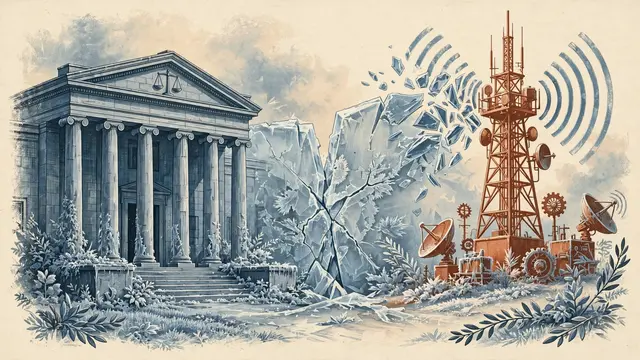
Israel's Attorney General, Gali Baharav-Miara, has sided with petitioners challenging a new broadcasting law, urging the Supreme Court to issue an interim order freezing its implementation. The law, championed by Communications Minister Shlomo Karhi, was approved by a special Knesset committee. The Attorney General's office argues that the legislative process was marred by "exceptional and extreme fundamental flaws," from its initial drafting without legal counsel's approval to a "blitzkrieg" parliamentary procedure. These flaws, the office contends, violated Knesset members' rights and disrupted the institutional balance between government branches.
The Attorney General's response highlights that discussions in the special committee, chaired by MK Galit Distel Atbaryan, were allegedly "effectively controlled" by Minister Karhi. He is accused of dictating substantive changes without factual basis, systematically ignoring the Knesset's legal advisors, and limiting committee members' actions. The law was notably split in its final stages, with the enforcement chapter removed and dramatic changes made, including raising the threshold for a "small license" from NIS 80 million to NIS 2 billion. This change effectively exempts major commercial channels like Keshet 12 and Reshet 13 from the requirement to maintain a separate, independent news company.
News 12 submitted an affidavit detailing a February 2023 meeting where Minister Karhi allegedly stated his intention to amend the law so Prime Minister Netanyahu could directly influence broadcast content by contacting license holders, who would then be unable to refuse his requests. News 12 claims this demonstrates the law's "improper purpose", to dismantle the structural separation between commercial owners and newsrooms, exposing journalists to direct political and commercial pressure.
The Attorney General warns that enacting the law's provisions, such as lifting cross-ownership restrictions, allowing cable and satellite advertising, and advancing a new council selection committee, could cause irreversible changes in the media market, especially before elections and during a sensitive period for press and free speech. Therefore, the balance of convenience favors delaying the law to prevent the establishment of irreversible facts and regulatory uncertainty until the court's final decision.
Conversely, i24NEWS petitioned the Supreme Court to reject the freeze requests, warning of severe financial damage and operational harm. They argue that the petitioners are powerful, established media entities seeking to preserve their monopoly and block fair competition. i24NEWS contends the law was thoroughly debated for months, that fears of harming news independence are speculative, and that freezing the law before elections would harm pluralism and the public's right to diverse opinions. Minister Karhi criticized the court, accusing it of attempting to usurp governmental and legislative powers and alleging collusion between the court and media.
The same event, reported separately by each outlet. Open a few to compare what different newsrooms emphasize — and what they leave out.











Not the same event — other stories that share this one’s people, places, or theme: background, reactions, and follow-ups.

