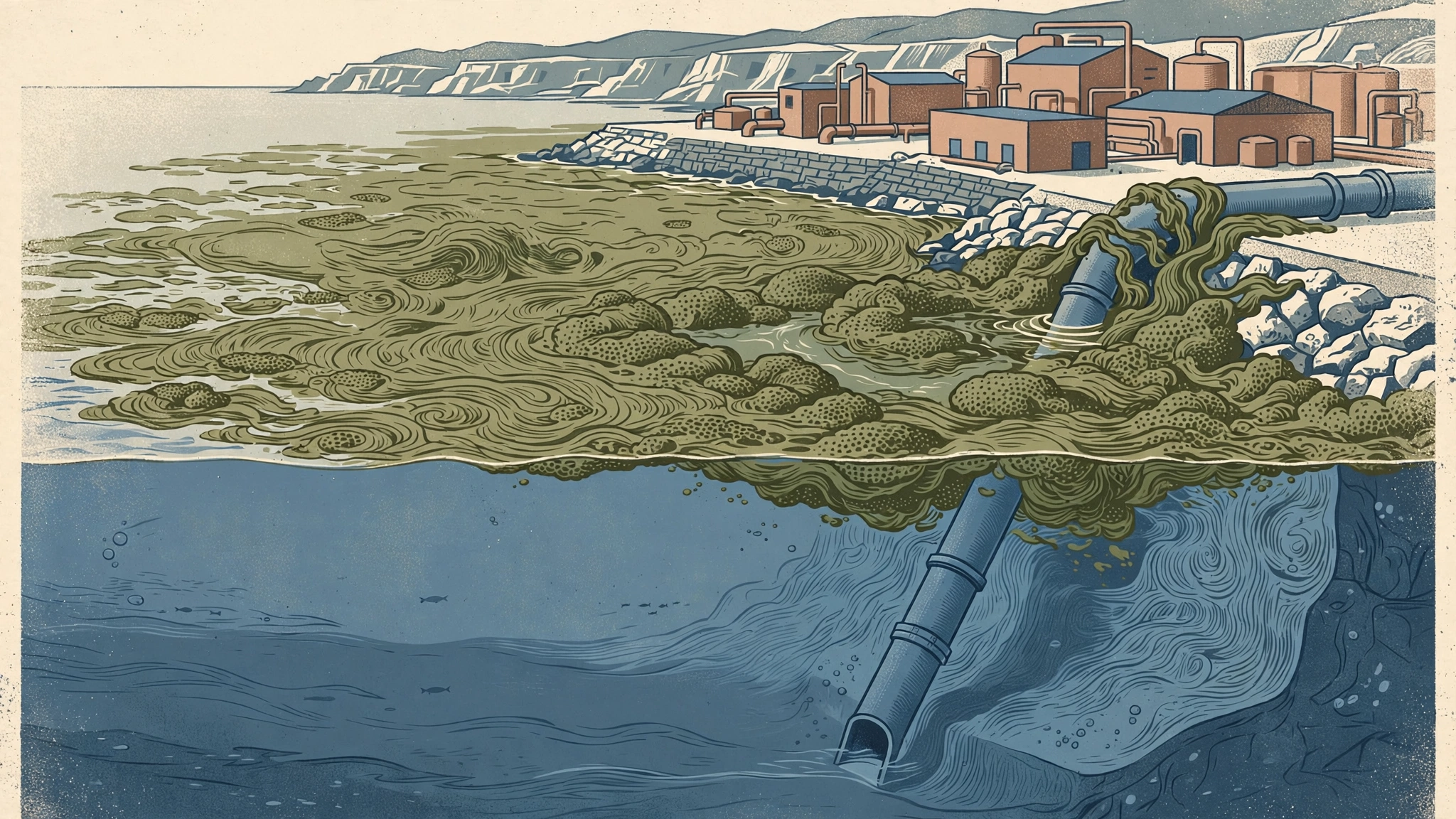
Israel Explores Deep Sea Water Intake to Combat Algae Bloom Affecting Desalination

Eight days after disruptions began at Israel's desalination plants due to a micro-algae bloom, only three facilities are operational, with just one running at full capacity. Mekorot, the national water company, is evaluating a novel solution: extending intake pipes several kilometers offshore into deeper, clearer waters to bypass the algae affecting current operations. Engineers are expected to decide within 48 hours whether to implement this plan, which involves installing multiple intake points further west in the Mediterranean Sea.
The initiative aims to reach areas with lower turbidity, enabling the plants to resume stable operations. Previous attempts to combat the algae by spraying chemicals, including a recent effort near Ashkelon, have proven ineffective, as turbidity levels remain high. Energy Minister Eli Cohen stated that the cost of extending the intake pipes would be relatively minor, with current expenses focused on acquiring additional filters to protect facilities from potential damage due to continued high turbidity.
Cohen assured the public that water tariffs will not increase despite the operational challenges and additional costs, citing the water sector's annual revenue of approximately 10 billion shekels as sufficient to absorb the extraordinary expenses. Currently, the Hadera plant operates at full capacity, Sorek 1 at one-third capacity, and Palmahim at half capacity. Other desalination plants remain offline, with no timeline for a full return to normal operations.
In response to the reduced desalination output, the Water Authority and Mekorot have increased water pumping from the Sea of Galilee and from drilling sites nationwide. The impact has been most significant on agriculture and public area irrigation, while drinking water supply to households has been minimally affected. The minister emphasized that water supply to Jordan will continue as usual and that Israel does not require external water assistance at this time, alleviating concerns about drinking water shortages. Cohen also dismissed theories linking the phenomenon to Gaza, attributing the micro-algae's arrival to the Nile River, carried by Mediterranean currents to Israel's coast.
The same event, reported separately by each outlet. Open a few to compare what different newsrooms emphasize — and what they leave out.









Not the same event — other stories that share this one’s people, places, or theme: background, reactions, and follow-ups.

