
Iranian Diplomat Reveals Deep Rift Over Economic Collapse Fears and Hormuz Control
Translated & summarized from Kikar HaShabbat by baba
A senior Iranian diplomat revealed a deep rift within Tehran between pragmatists fearing economic collapse and hardliners pushing for control over the Strait of Hormuz amid intensified U.S. military strikes. The U.S. aims to choke Iran's oil revenues through a naval blockade, while Iran retaliates with attacks on U.S. bases and Gulf states. Israeli assessments expect Iran to hold back unless the U.S. escalates further.
The story in 6 lines · by baba
- A senior Iranian diplomat exposes a deep split between pragmatists and hardliners in Tehran.
- U.S. military strikes target Iranian air defenses, missile sites, and coastal radar installations.
- Trump bets a naval blockade will reduce Iran's oil revenues to near zero within months.
- Iran retaliates with attacks on U.S. bases in Syria and drone operations in Gulf states.
- Iran admits to significant internal damage including destroyed bridges and disrupted airports.
- Israel expects Iran to remain restrained unless the U.S. escalates military actions significantly.
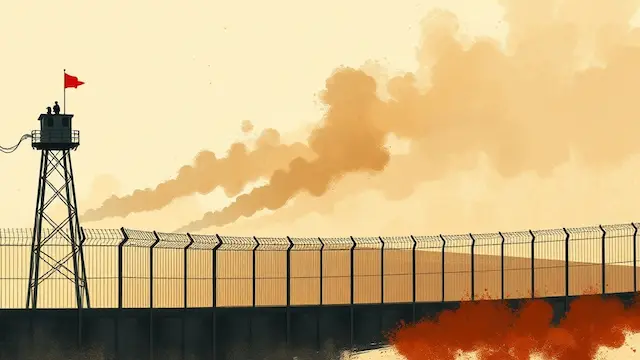
A senior Iranian diplomat disclosed a significant internal divide within Tehran's regime amid escalating U.S. military strikes. The split is between pragmatic officials worried about economic collapse due to renewed maritime sanctions and hardliners demanding aggressive control over the Strait of Hormuz as leverage against the United States. This revelation comes as the U.S. intensifies attacks across Iran, targeting air defense systems, coastal radar sites, missile and drone capabilities, and small boats, according to U.S. Central Command.
President Donald Trump is betting that reinstating the naval blockade and cutting Iran's oil exports will cripple the regime's economy and force it to relinquish its hold on Hormuz. Analysts estimate that a four to five-month blockade could reduce Iran's oil revenues to nearly zero. Pragmatic leaders in Tehran fear that economic deterioration could destabilize the regime, recalling the widespread protests earlier this year.
In response to U.S. escalation, Iran has launched aggressive retaliatory strikes against American bases and Gulf states. The Revolutionary Guards claimed an attack on the Al-Tanf base in Syria as revenge for fallen soldiers, while drone launches and interceptions were reported in Bahrain, Kuwait, and Qatar. Iran admitted to severe damage within its borders, including the destruction of five key bridges in the south, power line disruptions, and airport closures. An Iranian military spokesperson warned that their counterattacks would be "severe, extensive, and more terrifying than ever before."
Israeli assessments indicate that Iran will maintain relative restraint unless the U.S. significantly escalates military actions. The U.S. plans to increase the frequency, intensity, and target range of strikes, though the timing depends on White House decisions. Both sides are engaged in a tense zero-sum game, carefully gauging each other's breaking points amid the ongoing conflict.
Mentioned
The same event, reported separately by each outlet. Open a few to compare what different newsrooms emphasize — and what they leave out.
Haredi 2
