
Netanyahu Shifts Focus From Coalition Bloc to Personal Mandate in Election Strategy
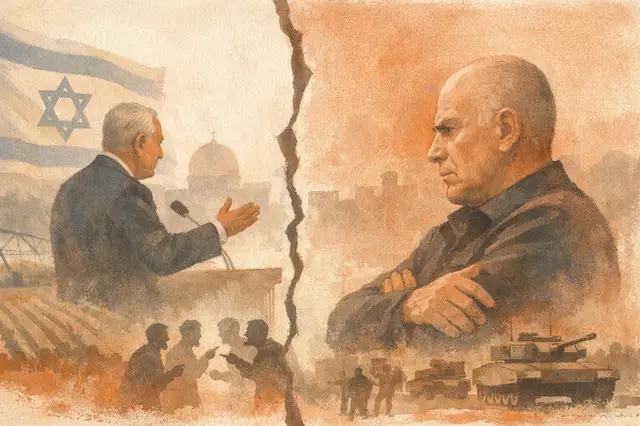
In a press conference on the evening before, Benjamin Netanyahu emphasized the concept of a "broad national government" and called for an end to political boycotts. However, beneath this call for unity lies a deeper political strategy. Netanyahu is not abandoning the traditional right-wing bloc but is preparing a narrative for a scenario where the bloc does not secure a majority of 61 seats. In such a case, the political battle would shift from who controls a stable coalition bloc to who has received a personal mandate from the public to lead.
Netanyahu clarified that he does not aim for a narrow government nor one reliant on Arab parties. He outlined general conditions for joining a government, including recognition of Israel as the nation-state of the Jewish people, respect for individual rights, a free economy, and maintaining Israel's self-defense capabilities. He also linked these to the need for broad agreements on contentious issues like military conscription and judicial reforms.
The backdrop to this strategy is recent polling data. The latest Channel 12 poll shows Likud as the largest party with 23 seats, but the current coalition holds only 52 seats compared to 68 for the opposition, including Arab parties. An i24NEWS poll gives Likud 27 seats, but the coalition totals 57 seats against 63 for the opposition. This means Netanyahu can remain the leading candidate but faces challenges in forming a stable bloc.
Netanyahu’s approach is thus not just a call for unity but groundwork for a new phase where he can claim a renewed personal mandate following the October 7 war and ongoing conflicts with Iran, Lebanon, and Gaza. Traditionally, the bloc determined government formation, but with the bloc weakened, Netanyahu seeks to shift focus to Likud’s size and his personal legitimacy. However, this framing has procedural weaknesses since Israeli Basic Law grants the president discretion to assign the mandate to any Knesset member who agrees to form a government, not necessarily the leader of the largest party.
Reactions were swift and polarized. Right-wing figure Itamar Ben-Gvir expressed concern about a government relying on left-wing elements, calling the move "very troubling," while Gideon Sa’ar welcomed the idea of a broad government as a national interest. On the left, Gadi Eisenkot, Benny Gantz, and Yair Golan rejected the call outright, accusing Netanyahu of division and incitement and urging bloc parties not to join him.
Politically, Netanyahu is addressing multiple audiences simultaneously: reassuring his right-wing base that he won’t depend on Arab parties, telling centrists he alone can lead a broad government and end boycotts, signaling to the ultra-Orthodox that conscription issues will be resolved consensually, and urging Likud members to build a larger, more centrist party. This strategy also relates to internal Likud struggles over reserved seats and primaries. Netanyahu’s moderation signals outwardly contrast with managing his base internally, exemplified by Ben-Gvir’s immediate pushback.
In summary, Netanyahu is shifting the campaign focus from achieving a 61-seat bloc majority to claiming a personal leadership mandate. He replaces the arithmetic of coalition blocs with a personal vote of confidence, betting that Likud’s size and his legitimacy will suffice where the bloc cannot reach a majority.
The same event, reported separately by each outlet. Open a few to compare what different newsrooms emphasize — and what they leave out.







Not the same event — other stories that share this one’s people, places, or theme: background, reactions, and follow-ups.



Ask About This Article
Duki reads it, and every newsroom on the same story, then answers with sources.