
Netanyahu Proposes Broad National Government Amid Political Debate and Likud Primaries
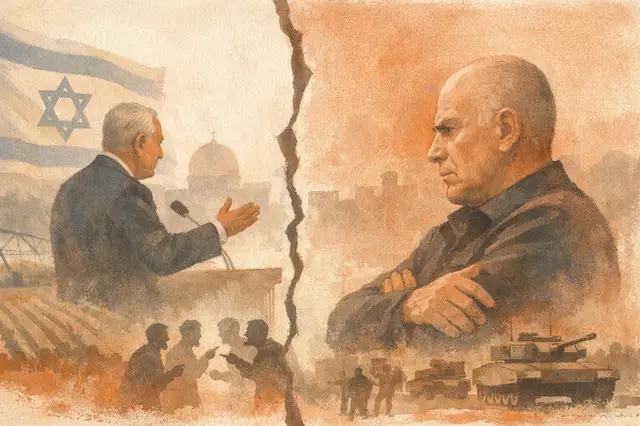
Israeli Prime Minister Benjamin Netanyahu announced his intention to form a "broad national government" during a press conference focused on the Lebanon agreement on June 27, 2026. This declaration sparked widespread reactions across the political spectrum. On June 28, political commentators Amit Segal and Ben Caspit discussed Netanyahu's statement and the upcoming Likud party primaries.
Amit Segal clarified that Netanyahu did not explicitly call for a unity government but rather a broad national government, which would primarily rely on right-wing and ultra-Orthodox parties such as Shas, Otzma Yehudit, and the Religious Zionist Party, alongside Likud. Segal suggested Netanyahu's move aims to capture voter sentiment amid polls showing public desire for unity, contrasting Netanyahu's offer with opposition leaders like Gadi Eizenkot and Naftali Bennett, who propose a government of change.
Ben Caspit criticized Netanyahu for promoting unity rhetorically while simultaneously advancing controversial legislation favored by his ultra-Orthodox allies. Caspit described Netanyahu as unwilling to relinquish his right-wing bloc, accusing him of deepening political division despite calls for reconciliation. He noted Netanyahu's failure to take steps that would genuinely foster unity, such as opposing exemptions from military service or protecting independent media.
Regarding the Likud primaries scheduled for August 4, Netanyahu reportedly demands 11 reserved spots within the party's top 40 list, aiming to introduce new leadership figures into the party's upper ranks. Both commentators agreed this could intensify competition within Likud, potentially reshaping its leadership. Caspit compared the situation to 2006 when Netanyahu faced internal party challenges.
The debate highlighted uncertainty about how Netanyahu plans to achieve his broad government goal, especially if Eizenkot's party becomes the largest faction. Segal emphasized that coalition dynamics, not just party size, determine government formation. Both commentators acknowledged public appetite for unity but questioned Netanyahu's ability to deliver it given his current political strategy and alliances.
The same event, reported separately by each outlet. Open a few to compare what different newsrooms emphasize — and what they leave out.







Not the same event — other stories that share this one’s people, places, or theme: background, reactions, and follow-ups.

Ask About This Article
Duki reads it, and every newsroom on the same story, then answers with sources.