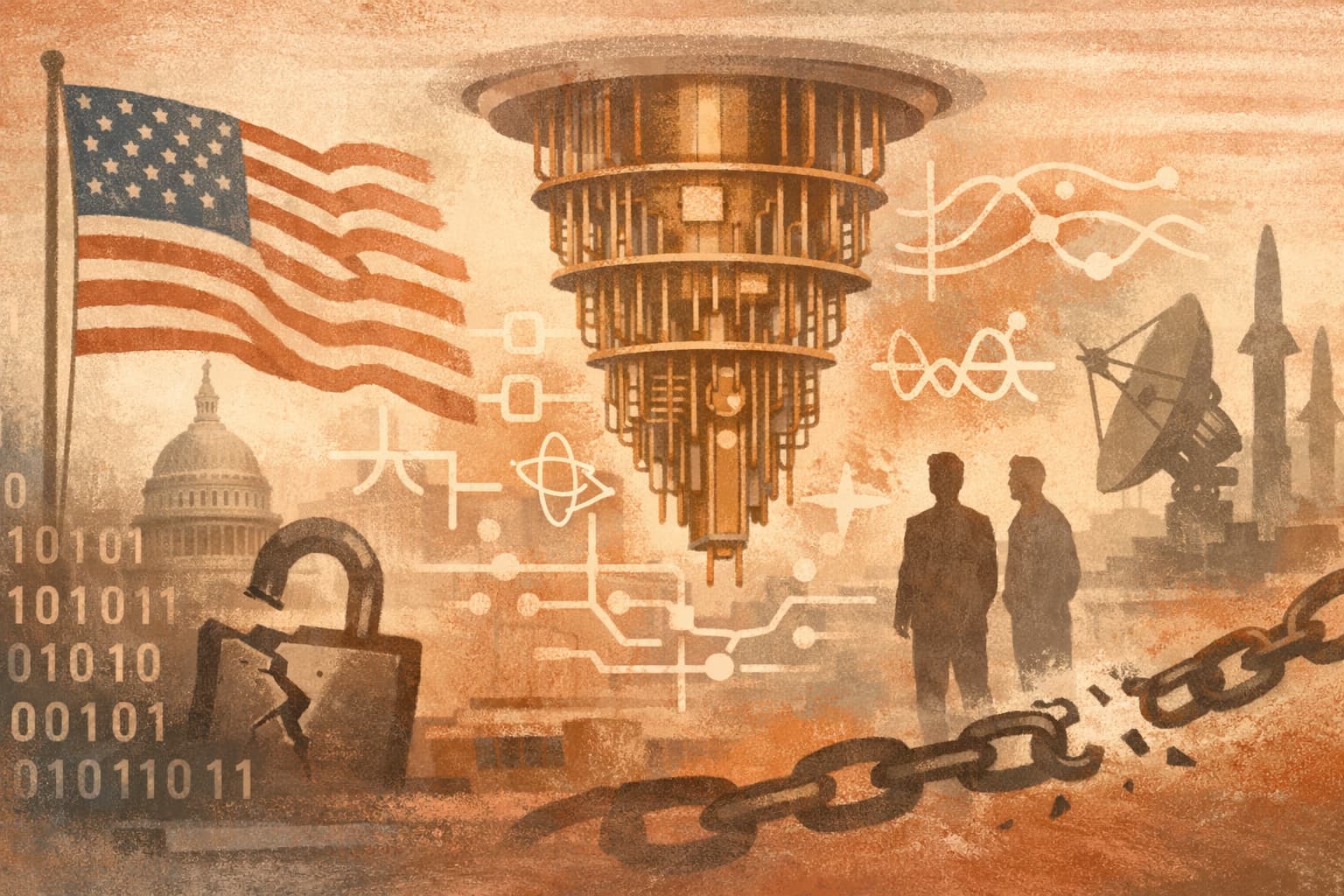
U.S. Races to Prepare for Quantum Computing's Threat to Encryption
Quantum computing, a field built on the principles of quantum physics, is emerging as one of the most consequential technologies in development, even as much of the world focuses on artificial intelligence. It promises to solve problems that today’s supercomputers cannot handle in a reasonable time, but it also raises major cyber-security fears because future quantum machines could break the encryption that protects financial, medical, government, and personal data.
Experts warn that the so-called "Q Day", the moment a quantum computer can crack encryption now considered secure, could arrive within a few years. The greatest concern is that states and hostile actors are already collecting encrypted information today, planning to decode it later once the technology matures. If that happens, data protected by current encryption standards could become exposed.
Against this backdrop, President Donald Trump signed executive orders aimed at speeding quantum development in the United States. According to the report, the administration wants to build a substantial government quantum computer within about two years and move up the shift to quantum-resistant encryption to 2031. The effort also reflects competition with China, which is investing heavily in the field and views it as strategically important for decades ahead.
The U.S. fears falling behind in a race that could affect not only the economy, but also national security, critical infrastructure, and communications systems. Classical computers use bits that are either 0 or 1, while quantum computers use qubits that can represent more complex states and perform massive parallel calculations. That power could drive advances in medicine, new materials, energy, and science, but current quantum machines remain large, fragile, and dependent on extreme cooling and precise isolation. New quantum-resistant encryption is already being developed and has received initial standards in the United States, but the main challenge is to upgrade government, banking, and infrastructure systems before the technology is exploited maliciously.
The same event, reported separately by each outlet. Open a few to compare what different newsrooms emphasize — and what they leave out.

Not the same event — other stories that share this one’s people, places, or theme: background, reactions, and follow-ups.

