Quantum Computing, Not AI, Is the Real Digital Threat, and the U.S. Is Racing to Prepare

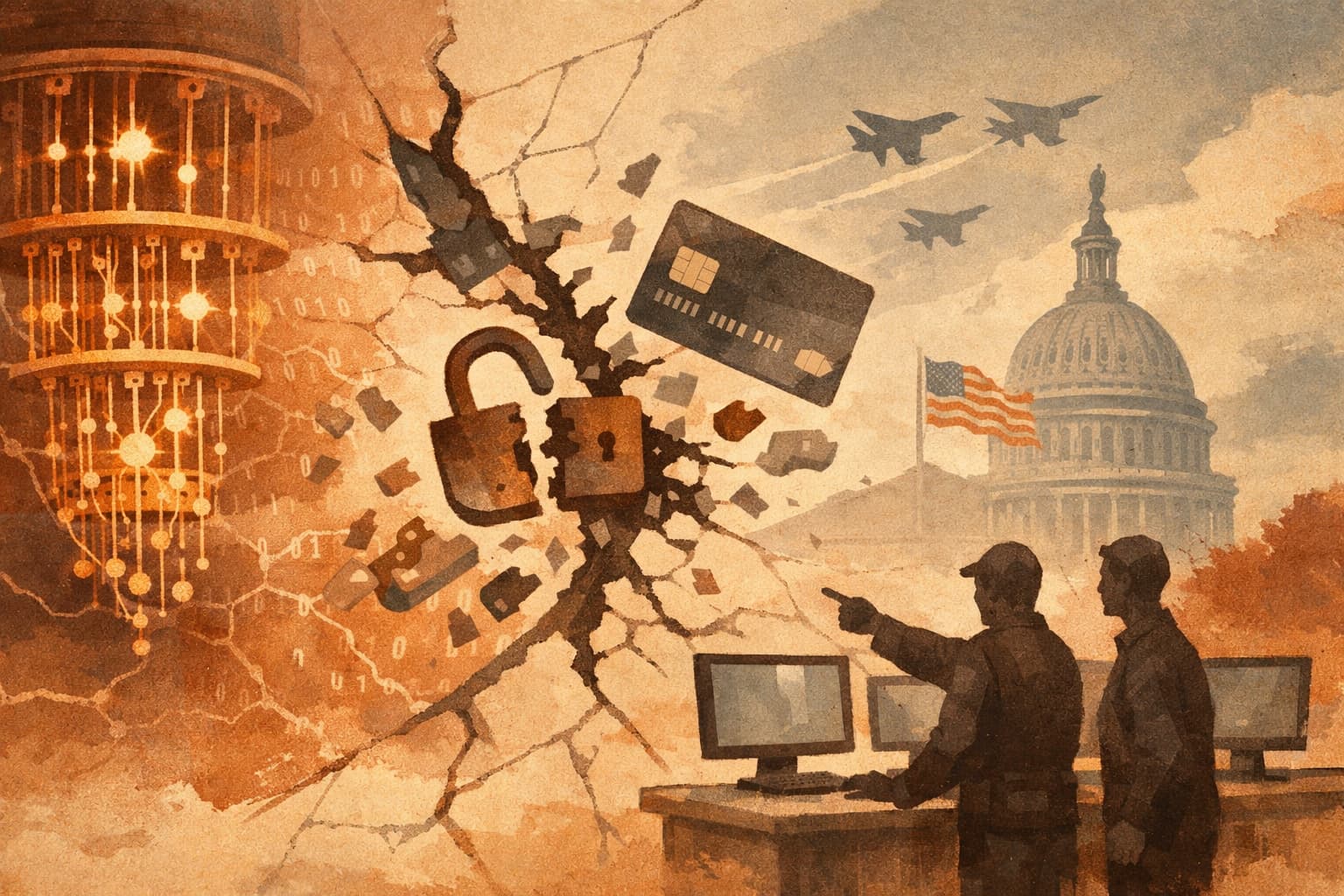
While public attention has centered on artificial intelligence, the article says the more immediate danger comes from quantum computing, which could eventually break credit cards, online logins and digital secrets. It notes that major companies including Google, IBM, Nvidia and Amazon are pushing the field forward, and that President Donald Trump has responded with two emergency executive orders to accelerate federal preparation.
Google’s latest quantum chip, Willow, is presented as a warning sign: the company says it solved in five minutes a computation that would take today’s best supercomputer about 10 septillion years, a number with 43 zeros. John Preskill, director of the Quantum Information Institute at Caltech, said quantum machines are “good in an extraordinary way at cracking codes,” adding that once they are powerful enough, the encryption used for online card payments and website logins “will simply no longer be safe.”
The White House has ordered the first government quantum supercomputer to be built within two years at a federal lab, and moved the federal deadline for switching to quantum-resistant security from 2035 to 2031. Google says “Q Day,” the moment when quantum computers can break global encryption, could arrive as early as 2029. The article says the United States is behind China financially, with Beijing believed to have poured about $12 billion in state funding into the effort.
The technology works with qubits, which can be both 0 and 1 at once through superposition, allowing many combinations to be analyzed simultaneously. It could also transform medicine and science, enabling drugs and molecules to be designed atom by atom, according to Chris Perry of the University of Sydney. But the machines remain room-sized systems that must be cooled to near absolute zero and isolated from disturbances, while quantum-resistant encryption already exists in standards published by the U.S. National Institute of Standards and Technology.

